Someone said today is the first day of spring but I thought it was tomorrow. Not that today was tomorrow rather that the first day of spring was tomorrow. Lean in, lean in the wind is blowing and there is grit everywhere dust and dirt and grit the wind blowing it into your hair your mouth your eyes squinting into the weak sun the first day of spring or is it tomorrow? Tomorrow we may well ask is this today or was this yesterday this first day of spring with the wind blowing clenching our jaws shutting our eyes against the fine dust and grit blowing against you always it seems against you never with you well it swirls this wind lean in, lean in heading into spring today yes it must be or maybe tomorrow the sun too feeble to do much good the wind is cold the wind has bite it carries a fine grit with it lean in, lean in you’ll get there yet


Any writer worth his or her salt is aware of audience. You can write in your journal or on your shiny new MacBookPro but until you share what you’re writing with someone else, you haven’t completed the cycle and you’re not really writing. You need to share it. Even if it’s only an audience of one, like your husband or wife or creative writing instructor – until you’re prepared to share it, you’re not really a writer.
I was thinking of the nature of my own audience when I was looking through the origin of hits on this blog of mine this weekend. Now that I have learned how to figure this out on WordPress, I realize I have been miscalculating just who exactly has been reading these words. I assumed it would be people from Calgary, perhaps those who used to read my column in the Calgary Herald, or have seen my plays downtown, or my students, or my many Facebook friends.
Generally, that’s probably the case. And yet reviewing the origins of my hits today, I see I have had six hits so far: three from Turkey, one from Portugal (my daughter, Hanna) one from Canada and one from Taiwan. So clearly, I know nothing about my audience, about who is reading this, or why, and I am once again made to realize just how different the world is now from when I started out in my writing career.
My first encounter with an audience was with a small brave collection of souls who showed up at the old Norman MacKenzie Art Gallery at my Alma Mater, the University of Regina, to hear me read some of my poems on a cold and snowy night over 30 years ago. I don’t remember the circumstances of why I was even asked, I certainly hadn’t published anything, but there I was in with my mullet and my skinny tie reading some poems that have since been lost to the ages.
Terrifying, is all I remember about it. But at least I could see who was there. (And who wasn’t.)
(Making it all the worse, the old Norman MacKenzie Gallery was tucked in beside the Conservatory of Music at the U of R. I had just defected from the music faculty to become an English major. Of course, no one cared. But I hardly knew it that night!)
Around this time, a short story of mine was produced by the CBC and broadcast nationally. I remember being in Toronto and out for supper with some friends (the Campbell clan). We gathered around the radio and listened to my story being broadcast across the country. Who knows who even heard it? Maybe everybody! Maybe nobody. But I was certainly filled with a great sense of my own self-importance that night like I’ve probably never felt since. That night on the subway home, I felt like Pierre Burton or something. It’s hard to impress on readers of this blog at this point in time the importance of the CBC in the development of a writer’s career. The CBC! The production values! Sea to sea to sea! And the money was nothing to sneeze at, either!
That night on my way home, with the sonorous tones of the PROFESSIONAL ACTOR who had read my little story reverberating in my young brain, I clearly thought I was destined to greatness.
Suddenly the entire country was my audience. What could possibly stop me??
There followed a career in the theatre (which as far as I know is still ongoing). The blessing and the curse of the playwright is that you have no choice but to be very aware of your audience. You’re sitting right there with them as they experience your work of art. (Or in my case, pacing up and down at the back of the theatre, sweating it out.) You know if you’ve succeeded, that’s for sure. But even more acutely, you know if you’ve failed.
Public humiliation is never pleasant, and there’s no worse a feeling than to be sitting in the theatre when your play is going down like the Titanic despite the brave efforts of your cast.
Writing for a newspaper is interesting. My column in the Herald came out in the Saturday paper. I remember one of the early weeks, I found myself in a coffee shop watching a gentleman as he read the paper while drinking his morning coffee. I watched and waited. Finally he got to the Entertainment section. My heart raced. He got to the page my column appeared on, frowned, maybe even grimaced, then put the section aside and moved on to Sports. So much for that!
But I guess a few people read it over the years. Recently, I was stopped in the Co-op store by a little old lady who told me how much she loves the column and how she reads it every week. Well, I haven’t written in the Herald for a few years now, so I asked her if she was still reading it and she said, “Yes, every week. Wouldn’t miss it.” You can’t very well call a little old lady a dirty stinking liar so I didn’t press the issue. But you can see it makes it hard to know with any certainty just who is reading what.
And now this. This internet thing. I just checked my hits again and I have a new one, this one from Mexico. What gives with that? Am I on the verge of becoming an international sensation? Or are there simply people everywhere and anywhere who magically or accidentally hit the right buttons so that my blog suddenly appears on their computer screen? Don’t they have anything better to do? For that matter, don’t I? Maybe not . . . .
I really don’t know. I have to admit that I really don’t know who my audience is. If I ever did. So what can I say, but – whoever you are, wherever you are, whatever your reasons for reading this – thanks for reading?! As long as someone is reading it, I’ll keep writing it.
See you again soon.
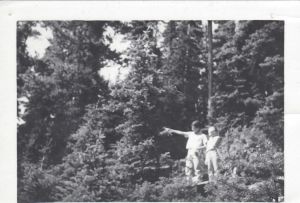
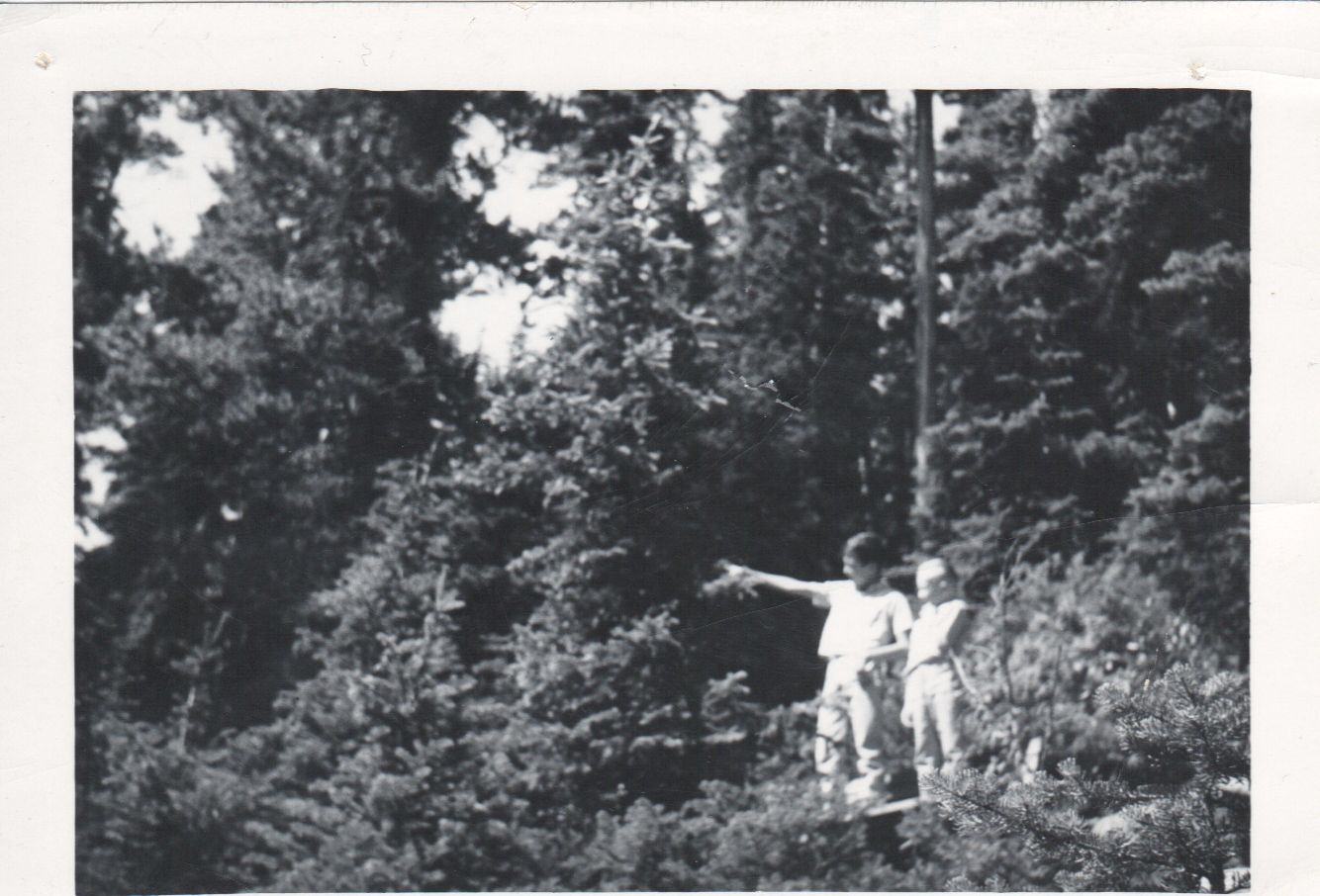
My brother and me posing for a photo in Banff in the early 1960's.
Diarists end up over the years creating their own personal book of days. I’m always aware of this on my birthday, for example. It’s not so much the fact that I think of the day as any great occurrence (he said, modestly), but because I keep a daily journal I could tell you with some certainty where I was and how I was doing on September 24 for the last 30 years or so.
Other days have their own resonance, and one of the most significant days in my life, March 2, just went by. As always, I found myself reflecting on the events of that day back in 1968 as I have in journals around the country for decades, now.
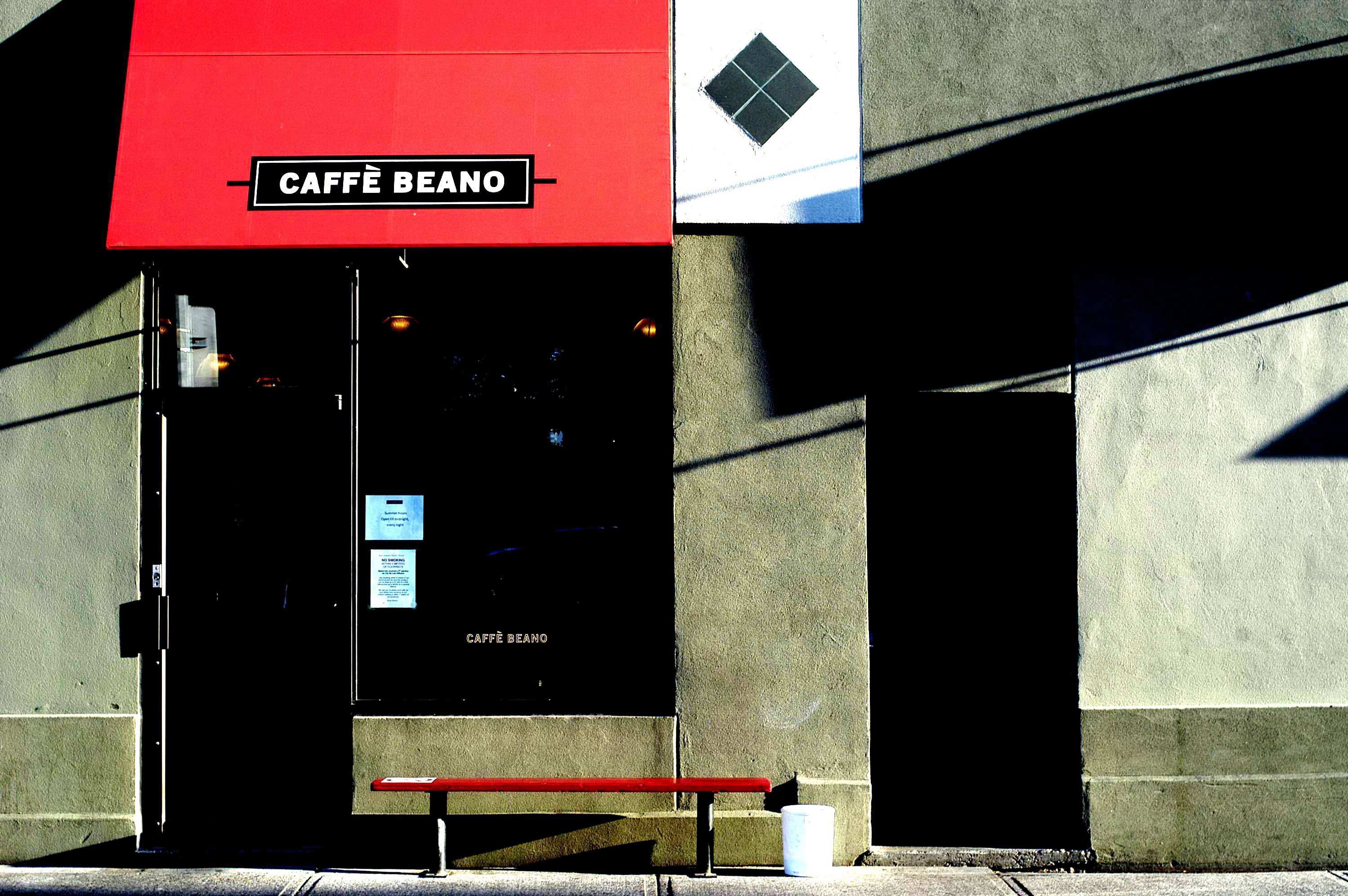
This is what I wrote in my little blue Clairfountaine journal in Caffe Beano on Friday:
In my life, in the mythology of my family (of which there are few of us left for whom any of this really matters anymore, anyway) today is the anniversary of my brother Gary’s death. It was in 1968. He was 16. I was 11. It was an event that would alter my life and shape my personality more than any other in the 55 years or so I’ve been dragging my bones across the face of the earth. Nothing else, good or bad, even comes close.
For 30 years now or so on this day I have dutifully written about my brother, the tragedy of his death, the devastating effect it had on my parents and family, the way it skewed my entry into adolescence, the immediate repercussions and the ongoing lingering colourations of who I am and how I am.
It’s hard to believe that I am now the parent of a child who at 19 is now 3 years older than my brother ever got to be. My rudimentary math tells me he would have been 60 now. When I think of him, which truthfully isn’t all that often anymore, I think of that 16 year old boy and how he was the day he died. I remember him listening repeatedly to Sergeant Pepper’s Lonely Hearts Club Band on the old stereo in our dining room and smoking a million cigarettes with his friends. I always think of him as being older than me. Not as an older man, but as a boy. Despite my advanced age, I still think of that boy as being my elder, superior in every way to me.
That being the case, it would seem that I still must maintain within me something of that 11 year old boy who woke up one morning in the late winter, eager to play a game of basketball with his team, only to have his world rocked. When I woke up, my mother called me and asked me to come into her room. She was still in bed. She had been crying. I was about to have the rug yanked out from under me in a dramatic and decisive way . . .
As I say, that’s just one of probably 30 such entries I have made on that particular day of the year, March 2. Last year’s was much grimmer, and written in poetry. Here’s just a fragment:
funeral, etc/the sudden too much attention/ paid to a shy 11 year old boy/I didn’t want it didn’t welcome it/family crumbling/ undirected/unfocused/undisciplined/music refuge/literature refuge/this journal/some drugs some sex/I liked having sex I think . . .
You get the idea. It’s too hard emotionally to think of going through my big suitcase of journals and find more examples. But I think the point is made.
And so this day serves as a constant in my life and in my journals. It demands a summing up of where I am now, how I’m doing, how I’ve dealt with an event that happened so long ago. Still dealing with it at some level, I suppose. Even more than my birthday, it is a day for me to take stock and once again, and yet again, to try to define myself as a man.
Dylan Thomas said, “After the first death, there is no other,” and I have to agree with him. (“A Refusal to Mourn” is the name of the poem, it’s a good one.) I think my dad died sometime in March but I am not aware of the date. My mom died sometime in the late fall, but I’m not even sure of the month, I think it was October. Much as I loved them, I’m hardly sentimental about such anniversaries.
Ah, but that one death, on that one day, will continue to haunt me forever.
Thanks for reading . . .

When Michael Finner and I began B House, I thought we would become a publisher of drama, for the simple reason that there are not a lot of good opportunities for play publishing nowadays. Also, I know all the playwrights in town so what was to stop us? I’m not sure how to answer that question. Only Lindsay Burns came forth and we published her two wonderful extended monologues, Dough and the Vajayjay Monologues in one volume. We then published my play Queen Lear, but since then, nothing. Like I say (in Part One of this piece) we have a number of plays in the works, and I hope B House will have some new drama books on the shelf this spring.
At the same time, though, we did manage to publish a number of poetry books. This happened for a number of reasons. I was becoming more involved in the poetry scene in Calgary, with readings at the Spoken Word Festival and Single Onion events. I’ve also become a mainstay at Jocelyn Alice’s wonderful eclectic “Art Saving Lives” events held at Higher Ground Café in Kensington the last Sunday evening of the month.
Calgary continues to confound the experts (ie, people not from Calgary) with it’s insanely vibrant theatre scene, yet I was surprised and delighted to discover that we are home to a very rich poetry scene as well. As far as I’m concerned, Calgary is home to some of the best poets in the land.
Our involvement with poetry began with a poetry anthology which came about as a result of the coffee shop I frequent, Caffe Beano. One day I was in there happily writing in my journal and I looked around and saw that five of six other patrons were doing the same thing. Suddenly the penny dropped and I realized that there must be a lot of poetry written by the people who frequent Beano, if not actually in Beano.
And so with the help of the ownership and a little arm twisting here and there, in the summer of 2008 we came out with the first Beano Anthology. In the slim volume, we published poems by over 30 writers – for some of them it was their first publication. We transformed Beano’s Stampede Breakfast into a book launch and sold 93 copies of the book that day.
This must be some kind of record, on many levels. Again, it confounds people’s image of Calgary, to think that the hot topic at a Stampede breakfast would be poetry, but that’s one of things I love about Calgary and my place in it. The minute you think you have it figured out, something like this happens and you have to reconsider your opinion of the city.
Other books followed, including an art book made possible by the City of Calgary and the Drop In Centre: reproductions of paintings of trees by “homeless” artist Reg Knelsen, accompanied by poetry by David van Belle, appropriately titled Reg’s Trees.
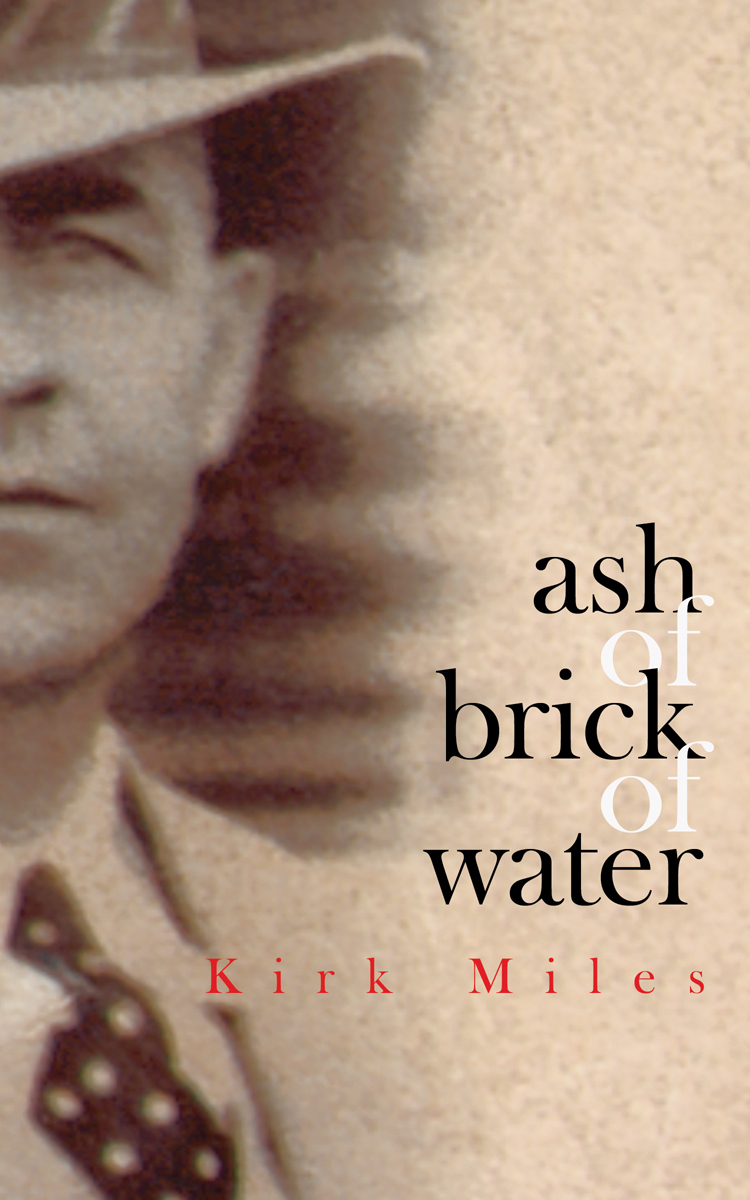
Our next book was Kirk Miles’ wonderful collection, of ash of brick, of water. When we published Kirk’s book, we were still following the classic model, that of paying for the design and printing costs ourselves, and then trying to offer (and deliver) Kirk a reasonable royalty. But I must admit by this time, two years into this venture, we were running a little thin. Our original manager, Stephanie Davis who did an amazing job for us in the early years, was moving on in her own life and so left us with the files but Michael and I, fair to say, are not good at the daily nuts and bolts stuff.
Personally, I was getting behind in my own work and was finding it hard to get to all the manuscripts that kept trickling in. Michael was getting tired of putting his Mastercard out for all our expenses. So when we decided to publish Tyler Perry’s book, Lessons in Falling, we were pretty much running on empty. We managed to get the book designed and printed, but from that point on Tyler became pretty much a one man show in marketing and selling his own book.
That said, thanks to his own initiative, Lessons in Falling is probably our best-selling book thus far. In fact, it was on the Calgary Herald’s best selling list for a few weeks, not bad for a local company publishing the work of a young writer. But it’s through no thanks to B House. The success of the book came entirely from Tyler himself.
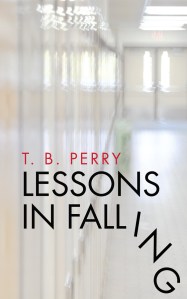
I actually took this cover photo but forgot to credit myself. Oh well!
The results of having a published book are intangible, of course. Tyler was recently short-listed for the City of Calgary Poet Laureate and wrote to thank me for helping publish his book, for without that publication he probably never would have been nominated. So you never know. And you can see how the rewards go beyond money.
If you are a Canadian poet or playwright or publisher and you go into this for the money, you’re not even mad. You’re not ever crazy. You’re just stupid, that’s all.
As self-publishing becomes more and more popular – in part this is due to changes in print technology that allows for small runs of high-quality books – maybe a small press like B House is destined to be an alternative. a clearing house for writers, allowing them total control of their book while offering an association of like-minded authors who, all in all, add up to a force greater than an individual author could create for him or herself. The success of your book then depends on your own ability to get out and promote it.
As this is increasingly where we’re heading, why not do this with a smaller company where you at least get something back for it? It’s 2012. No one else is going to do this for you. That’s just a reality these days.
In a sense, it reminds me of an old school writers’ collective, and I like it. No one’s going to get rich from these books, but it may make us more likely to get a coveted Canada Council grant or even become Poet Laureate.
I believe this may well be the future of poetry and drama publishing in Canada.
What B House offers at this point in time is quality control, I suppose. If you publish with us, we will make sure that your name will be associated with other authors who function at a certain level, who share a certain sensibility. Design-wise, there is a consistency to the look and feel of the books, as we have as our favoured designer Peter Moller, whom I happen to think is the best in the business. (I’ve added a link to his site, Egg Press, on my list of links on my website.)
A loose affiliation of like-minded individuals. Maybe that’s all it is. If B House continues to move in this direction, then I think the sky is the limit, and I believe we will offer a great service to local writers without totally burning ourselves out, creatively or financially.
A clearing house for good books by good writers. That’s something to aspire to.
Thanks for reading. . . .

Publish and Perish – Part One
I recently received a flurry of emails from participants in the World Interplay Festival of 2001. These are young playwrights from around the world whom I worked with when I was the Canadian delegate to this festival that runs every two years in Australia. Only now, of course, eleven years later, most of them are at the next stage of their careers. They’re not so young anymore and are becoming established in their various countries.
If there is a universal concern shared by these emerging playwrights and myself, it is the sad and worsening state of publishing that seems to be pretty much the same wherever you go. I shared my situation with them and thought I’d share it here. It’s rather lengthy, so I’ve broken it into two parts, the first having to do mostly with play publishing, the second with poetry.
My situation: 10 years into a two book publishing deal with a reputable Canadian publisher, I received my Royalty Statement last week and learned that I am now at a balance of -$239.53. This is presumably good news, showing positive growth from last year’s figure of -$249.06. It looks to me like I made $9.53 last year.
At this clip, in 23 years or so I will be out of the red and into the black.
One of the books in question is my old chestnut, Some Assembly Required. It was originally published by another publisher. Although the play has received scores of productions, at least one a year in the 18 years since I wrote it, and although it was a finalist for the Governor General’s Award, when the initial printing sold out, that publisher decided not to reprint it. I never understood that, other than to think of it as being a typically Canadian decision: that thing is too successful. We want no part of it! If nothing else, at least that decision made the play available for the other publisher with whom I now am in a negative variance.
Don’t get me wrong. It’s not like anyone is purposely trying to rip me off. Sadly, it’s just how it is. There’s no skullduggery here as far as I know. Anyone involved in the book publishing industry these days must be driven by only the fuzziest of romantic notions of a world that has books in it. Canadian plays published and on the shelf is a laudable dream. It’s no one’s fault. The reality is there’s just no money involved. We simply don’t have the numbers. It’s just how it is.
So when my friend Michael J. Finner approached me almost five years ago with the hair-brained scheme of starting our own publishing company, I thought I could hardly do worse than I was already doing, and so B House Publications was born.

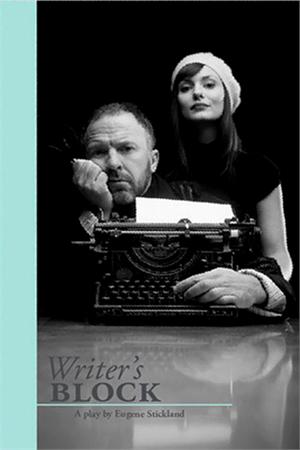
Trevor Leigh and Arielle Rombough who starred in the premiere production on the cover of B House's first book.
We chose as our entry point into the madness my play Writer’s Block. To make a long story short, we had the play in the lobby on opening night and we sold more copies than I thought possible. A subsequent launch of the book at the Auburn Saloon made the book a virtual best seller in Calgary. Thanks to a generous contract I negotiated with myself, I was in at about a 25% royalty. You can clearly see that even selling one copy of the book would put me miles ahead of where I am with my other publishers. As far as play publishing goes, I did quite well on that book. Don’t get too excited, though. All in all we’re only talking a couple hundred copies.
Suddenly we had a publishing company and now there was work to be done. It was never my intention for B House to be a vanity press. As was the case with T.S. Elliott and Faber and Faber, I thought it would be permissible for me to publish with my own company as long as we were publishing other writers as well, and I was publishing with other presses, which I have done.
In the world of drama, we published a book I am very proud of, Lindsay Burns’ two marvelous scripts, Dough and the Vajayjay Monologues. I have had many conversations with Calgary playwrights (we think of ourselves as a Calgary only publisher) and as far as I know we are now moving forward, roughly at the speed of a glacier, with works by Ethan Cole, Jason Long and Neil Fleming. I hope before too long we come out with books by these fine Calgary playwrights, and others yet to be identified.
In the meanwhile, B House published another play of mine, Queen Lear. Again, we had it in the lobby on opening night. Again, I made more money than I could have hoped for from a “real” publisher. But that’s as far as it’s gone in drama publishing, as this point in time.
I should mention that the name of the company, B House, is a frank if somewhat tongue in cheek admission that we wouldn’t think of ourselves as anyone’s “A” choice. I encourage the writers who come to me to exhaust other possibilities and only come to us as a last resort. “Start with Random House! Start with Frontenac!” We have no resources, no marketing, no one to maintain the website, no one to pick up the phone, no phone on any account, no one who even knows how to create an invoice. More and more, the company is sliding into the deep abyss of “a great creative venture marred by the absence of any organizing principle or anyone who knows how to do or is willing to do what the fuck needs to be done.”
Yet, B House has had something of a resurgence thank to the very rich poetry scene here in Calgary. I will pick up on this theme in my next post . . . coming to you a few days from now.
Thanks for reading!
 A million or so years ago, when I was completing my BA in English at the University of Regina I was hired by my mentor and namesake, Gene Dawson, to be his TA. This meant that I was thrust in front of a class of engineering students barely younger than me to teach them something about English grammar, which I knew very little about.
“Stay one chapter ahead and don’t let them see you sweat,” was the advice given to me then, and many times since in other situations. Anyone who plans on a career in education would do well to have that bit of advice tattooed on some part of his or her body.
I survived the class and learned something about English grammar, an increasingly rare skill to have. Here’s an example, free of charge. “Between you and I” is incorrect because between is a preposition which is followed by an object and never a subject; therefore you should be saying “Between you and me.” If you’ve been saying “Between you and I,” now you know better, so stop it. You see? Grammar can be a wonderful thing!
Since then I have taught in many place, mostly in creative writing, mostly playwriting. I have led workshops for young playwrights from around the world at World Interplay in Australia. I have taught kids from the hood in Harlem, in New York City. I’ve taught in Singapore, Lethbridge, Regina, Toronto, Vancouver and other places, classes ranging in time from a few hours to a full university semester.
My mother and her mother were both teachers. They say that the desire to teach, the need to teach, may well be hereditary, passed down through the genes. I have no reason to doubt this.
If there’s one thing I’ve learned, it has to do with the photo I poached and placed at the top of this post, and it comes from a Zen parable which goes like this . . . A Canadian scholar was seeking the wisdom of a famous Zen master about the secret of education. She was invited to have tea with the master. He began to pour the tea into the cup, and then continued to pour as the tea filled the cup, spilled over the edge, filled the saucer, ran onto the table and the floor, but still he kept pouring until finally she exclaimed: “Stop, Master, you can’t get any more tea into that cup!” He stopped pouring and said, “You have learned what you have come to learn from me.” And that was the end of the lesson.
Through all the teaching experience I have had over the ensuing decades since I dazzled that class of young engineers, maybe the one thing I’ve learned is when to stop pouring it in. We tend to think in quotas, of material that must be gotten through, and so we keep pouring and pouring even as our students’ eyes glaze over because their cups are full. I believe more and more that if we just allow the time and space for our students to probe the essence of the thing we are teaching, they will somehow get it, if they are meant to get it. This is certainly true in the arts. You might not want to use such a philosophy in teaching pilots how to land an airplane, or surgeons how to cut.
Just allow . . . it’s harder than it seems. It takes a measure of wisdom and patience, and a healthy ego.
Another thing I’ve learned comes from the Hippocratic Oath, which doctors say, and I think it wouldn’t be a bad idea to make teachers say parts of it as well.
I will prescribe regimens for the good of my patients according to my ability and my judgment and do no harm to anyone.
I always think if nothing else, if someone comes to me because he or she is interested in the theatre, don’t let me destroy their love for it. If nothing else, even if they learn nothing, do no harm. People learn in their own time, at their own pace. Maybe something they hear today will lie dormant for years, and when the time is right, suddenly it will make sense. I’ve known this to happen. A delayed reaction, sometimes by years. Finally it sinks in. We can’t always control when that will happen.
So. Just some thoughts on teaching on a cold snowy day in Calgary.
I honestly think it’s the highest calling.
Something by one of my favourite authors, Kurt Vonnegut, Jr. was swirling around on Facebook the other day. I shared it with my students at St. Mary’s University College and it seems like a reasonable way to end this bit of rambling. I believe what he says is true, and that in part explains why I have spent so much time and energy over the years teaching the next great generation of artists.
Enjoy! And thanks for reading,

Jared Jenkins who edited the Beano Anthology 2 with Jill Young, both former students of mine at St. Mary's University College.
This photo was taken behind Caffe Beano last summer at Beano’s annual Stampede Breakfast. This year, my little publishing company B House Publications, launched the second ever anthology of poetry and various writings by patrons of Calgary’s most literary coffee shop.(Copies of the Anthology are available at the coffee shop, or through me.)
But I show this photo in this little essay on life without a car because it was taken on a corner where there would normally be a lot of cars. In fact, it’s a block from where I was run over by a car (while crossing on a green light in a cross walk). Beyond the beautiful verdant foliage which we miss so much this time of year, and Jill and Jared’s smiling faces, what makes this photo so pleasant, in my mind is the absence of automobiles in a space where normally that’s all that would be found there.
Three months ago, I began a noble experiment to see if I could survive in a city like Calgary that was designed on the assumption that everyone has a car, with no car. Blessed by the best winter weather I can remember, and a light schedule throughout December and January, three months in I am happy, and a bit surprised, to report that I believe it is one of the best things I have ever done.
There have been a few obvious benefits. Financially. it was a good idea. Not having to re-lease a vehicle or pay for insurance or plates or gas or oil changes or car washes or parking has saved me around $1,500.00 and counting. To get by on the C Train, I have spent $51.00 on tickets and in three months have taken two cabs, at about $10.00 a pop which I would have done anyway as I was attending a function with free alcohol.
Health-wise, walking as much as I do now can only be good for me. I seem to average about 10 km a day, just in my day-to-day life. So, if you add it up, I’ve walked almost 1,000 km during this time — about the same as walking from here to Minot, North Dakota. (I’ve been to Minot and don’t really have a keen desire to go back, but you get my point.) I had hoped that all this walking might result in losing a few pounds in the old gut area. Sadly, I haven’t noticed a huge difference. Well, at least, if nothing else, I didn’t put any more on. Someone told me the other day that she thought I looked a little thinner, so who knows? Maybe it is making a difference.
When I made my move to become an official pedestrian, I thought that I could get by borrowing cars from friends, taking cabs, renting cars. Cars cars cars. So far, as I mentioned I have taken two cabs. One morning after Christmas I borrowed a car from a friend to take back some electronic recycling and visit the Market Mall. Another day, I cajoled my friend Zenon into giving me a ride to Ikea. That’s been it. I have had no need or desire to rent a car for a weekend. I looked at Calgary Car Share and thought about registering and having access to a car from time to time, but so far I haven’t bothered. Three months in, I can honestly say I don’t miss it at all.
When you become a pedestrian, you start to see cars as being optional. You start to question the need for them, the sheer numbers of them, and you notice maybe for the first time how our city is organized in such a way to allow for the movement of cars. Most of this organization results in the uglification of our city. It seems at some level like the city is nothing more than a series of parking lots joined by conduits allowing the movement of cars and the people in them, usually one at a time, from one parking lot to the next.
A lot of people say to me, “I wish I could do without a car but in my case I simply have to have one.” That would be the prevailing attitude of 99% of our population here. I don’t argue the point. In most cases, they’re right. And why shouldn’t they have one anyway if they want one? I can see there coming a day when I want a car again, just for the sense of freedom it brings, just to be able to go where I want, when I want. I try not to have a holier than thou attitude about it.
Yes it seems to me if we at least question the notion of the sanctity of the automobile, we have taken the first steps towards creating change. At the Walrus Magazine “The Art of the City” forum at the High Performance Rodeo a few weeks ago, Calgary author Chris Turner spoke very eloquently about this topic, and showed as an example photos from Copenhagen. The first was of a public square choked with cars, looking rather ugly and forlorn, if a town square can be said to have feelings. The second was of the same space after the city had imposed a ban on cars, and now it was looking very happy and spiffy and inviting. Through such changes, Copenhagen has been named the “most livable city” in the world. I don’t know where Calgary is on that list, but I suspect nowhere near the top.
The thing about Copenhagen and other cities that have made themselves more pleasant and livable, it doesn’t really take all that much to do it.
“But,” you might argue, “You don’t really work, you’re just a writer, you don’t have a schedule, you don’t have to be anywhere at any given time.” To a certain extent, this is true. (There really are people out there who are convinced that artists don’t really work. Our Prime Minister, for example! But that’s the surely fodder for another post.)
I’m fortunate I realize, to have the kind of schedule that allows me to walk. Although taking the C Train from my apartment on 12th Avenue to St. Mary’s in Fish Creek Park, door to door, is about ten minutes faster than it is to drive it. And having spent that 45 minutes reading instead of getting pissed off at other drivers and waiting at red lights has me showing up at school much more relaxed than driving ever did.
I am quite content to live in a modest apartment in the inner city, no desire to live in a big house in the suburbs that appears to be all garage from the street. I don’t have young children to drive around. I don’t ski or partake of mountain culture so I have no need to drive to the mountains every week. Even when I had a car, I didn’t.I think I used it mostly to drive back to Saskatchewan to visit my mother. Sadly, I can’t do that any more.
And so, I am a pedestrian, and I’m proud of it. I hope that reading this might inspire others to try, if nothing else, to become a little less dependent on their cars.
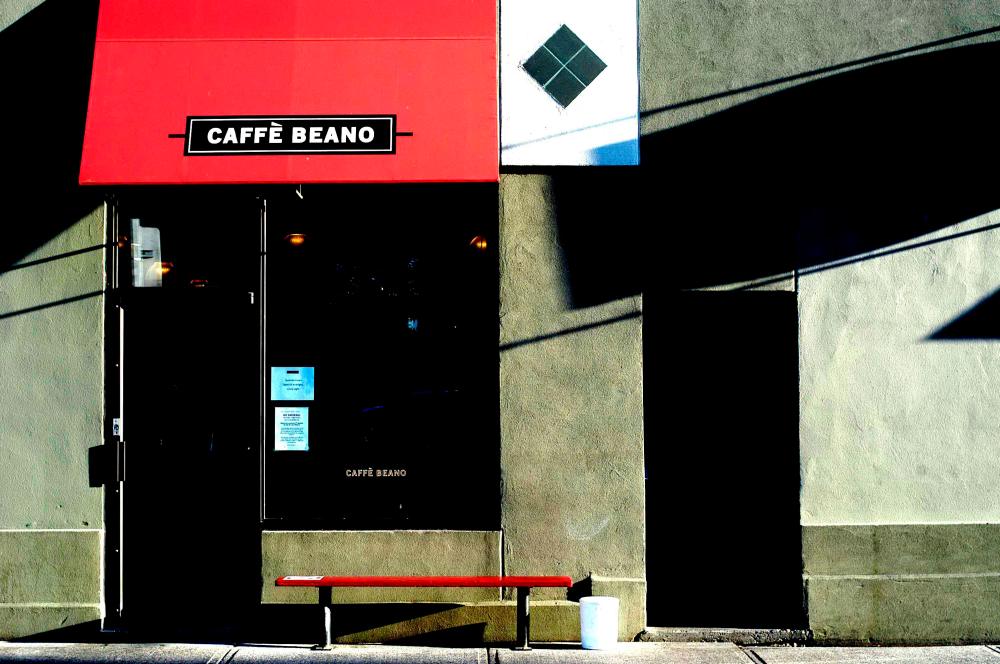
Post Script: Getting back to the Beano Anthology, a fellow pedestrian, the poet and photographer Jude Dillon, took the cover photo for the book one evening during his perambulations. It’s a beautiful photograph, taken in the waning light of a summer’s day. Here it is:
Thanks for reading!
 Ian Leslie has an interesting article in this month’s Intelligent Life titled “In Search of Serendipity.” Appropriately enough, I came across it accidentally when I was wandering around another aggregate site, The Browser.
I wrote a few weeks ago about how the Internet is changing the shape and scope of our minds, making us better at skimming information but less likely to engage in deep thought on any one subject. (“Life With No Computer” published here in early December, 2011.)
Leslie’s argument is that with the “democratization” of information, true serendipity (which he simply defines at one point as a happy coincidence) is becoming a rarer phenomenon. This got me thinking about the role of serendipity in my own life and career, and the fact that the early years were pre-internet, in fact pre-computer. (My first play was written on a typewriter!)
Artists are frequently asked about our careers, as if we somehow planned them to work out the way they did. I would suspect that with most of us, and maybe not just artists, maybe it’s true of doctors and lawyers and such, serendipity plays a huge role in our lives. So this is part of my story, and this blog is a rough sketch for a public lecture I will deliver at St. Mary’s University College later this year.
When I was a young man just starting out, I went to the University of Regina as a music major in piano performance. I finally realized with some pain and regret that I wasn’t good enough and so after a while slid over into English, but I had a few delusional years there when I though I might have a chance. During this time I became passionately interested in the work of Johannes Brahms, and in those days before the Internet, I did what we all used to do to find out more about him: I went to the library.
The fine arts library at the University of Regina had a good selection of books on Brahms. The trouble was, they were all written in German, some of them old enough to be in Gothic Script. So what to do? Serendipitous moment #1: I enrolled in a German class. I am of English heritage and I spoke not a word of it, but I survived German 100 and so enrolled in German 101 for the winter semester.
Half way through that class, my instructor, Frau Holle. a lovely woman of Austrian extraction, invited me up to her office for a late afternoon drop of sherry. (Imagine having a student of the opposite sex up to your office for a drink these days!)
“Herr Schtickland,” she said, “We have a very grave problem. I was hoping you could help.”
Each year the university was awarded a very generous scholarship by the Goethe Institut for one of its students to study in Germany for six months. No one from the upper years was free to take it, and they basically needed a warm body to fill the position so the scholarship wouldn’t be lost in future years.Was I free to go?
Serendipitous moment #2. I was, and I did.
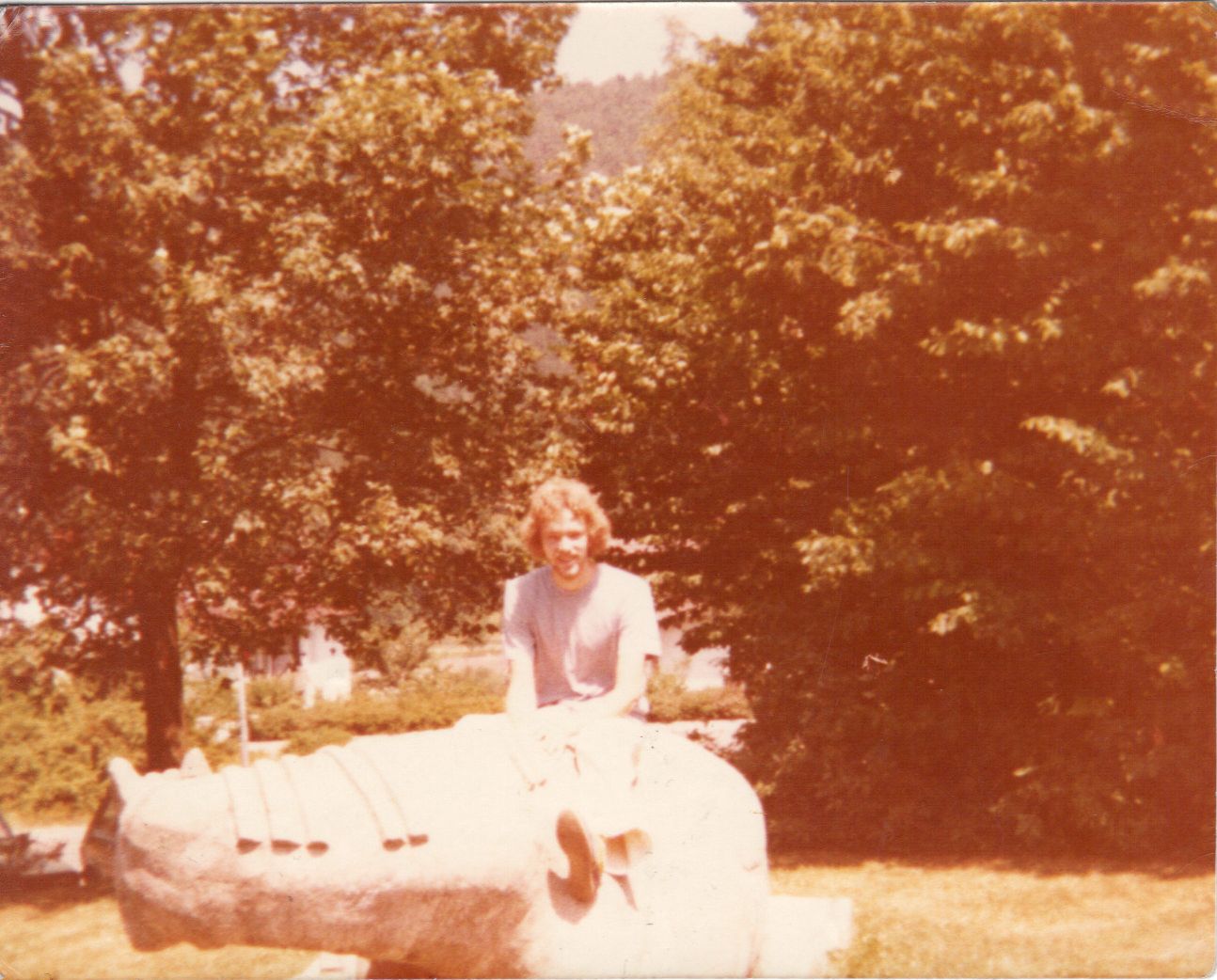
This is what I looked like back then. This is what photographs looked like back then:

1977, the year Elvis died. With a mustache sitting on some kind of ancient German beast. A typical mid-70's photo.
So off to Deutschland. Before the course started, I had a few weeks to kill so I went up to England to visit my Aunt Deirdre. While I was there, she suggested I go to Stratford and see some plays. Having grown up in Regina when I did, I hadn’t had the chance to see much theatre, because there wasn’t much theatre to be seen.
Serendipitous moment #3: I went to Stratford and saw a few plays by the old boy. Serendipitous moment #4: A brilliant production of A Midsummer Night’s Dream must have put the idea in my head that writing comedies would be a good thing to try.
And so back to Germany where I learned German well enough that people I met couldn’t tell I wasn’t from Germany. I loved my time there but I began to miss the English language, and so I bought a number of journals and began writing in them, which could well be Serendipitous moment #5. Certainly by the time I returned home, I realized I would never be a great concert pianist and began to think of myself as a writer and not as a musician.
And so I became a writer. I don’t believe I would have ever lived the life I have, if I had not ventured into a library some 35 years ago and become frustrated at not being able to read anything about my favourite composer. Part of the program in Germany was to study Gothic script and I got good enough that I could read a little. When I got back home to Regina, I went back to those books at the fine arts library and hacked through them, but I can’t pretend I gave them a good reading.
Still. what an interesting journey I went on, just to read a few books!
There is a postscript, which happened only a few years ago. There was a man who used to come to Caffe Beano, whose name I cannot remember and who passed away a year or so ago. I didn’t know him very well. He was a collector and seller of antiques, curios and rarities. One summer’s day as I was sitting outside the cafe writing in my journal, this man showed up with a rare find. It was a book published in the early 1500’s, I believe, that he had acquired at a Hutterite colony. It was a real beauty, with wooden covers and a richly decorated cover. Such antiquities are rare on the prairies.
He was showing it around (carefully) to some of the assembled. He opened it up and looked at the title page. “The trouble is,” he said, “I can’t read it. Can anyone here read Gothic script?”
Serendipitous moment #6.
I could, and I did.
Thanks for reading! Stay warm.
PS. I was in Caffe Beano this morning and asked around and found out that the man’s name was Udo. My friend Bob McDonald (aka Bob Loblaw because it sounds like blah blah blah) once bought an accordion from him. Who else are you going to get a good used accordion from? Apparently Udo had garages full of junk, but apparently it was all oxymoronic high quality junk. May he rest in peace. Bob remembers the Gothic Script incident, and told me that his estimation of me increased significantly that day.
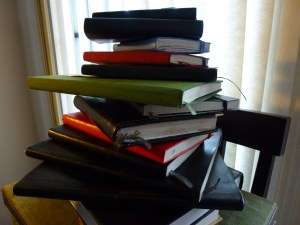
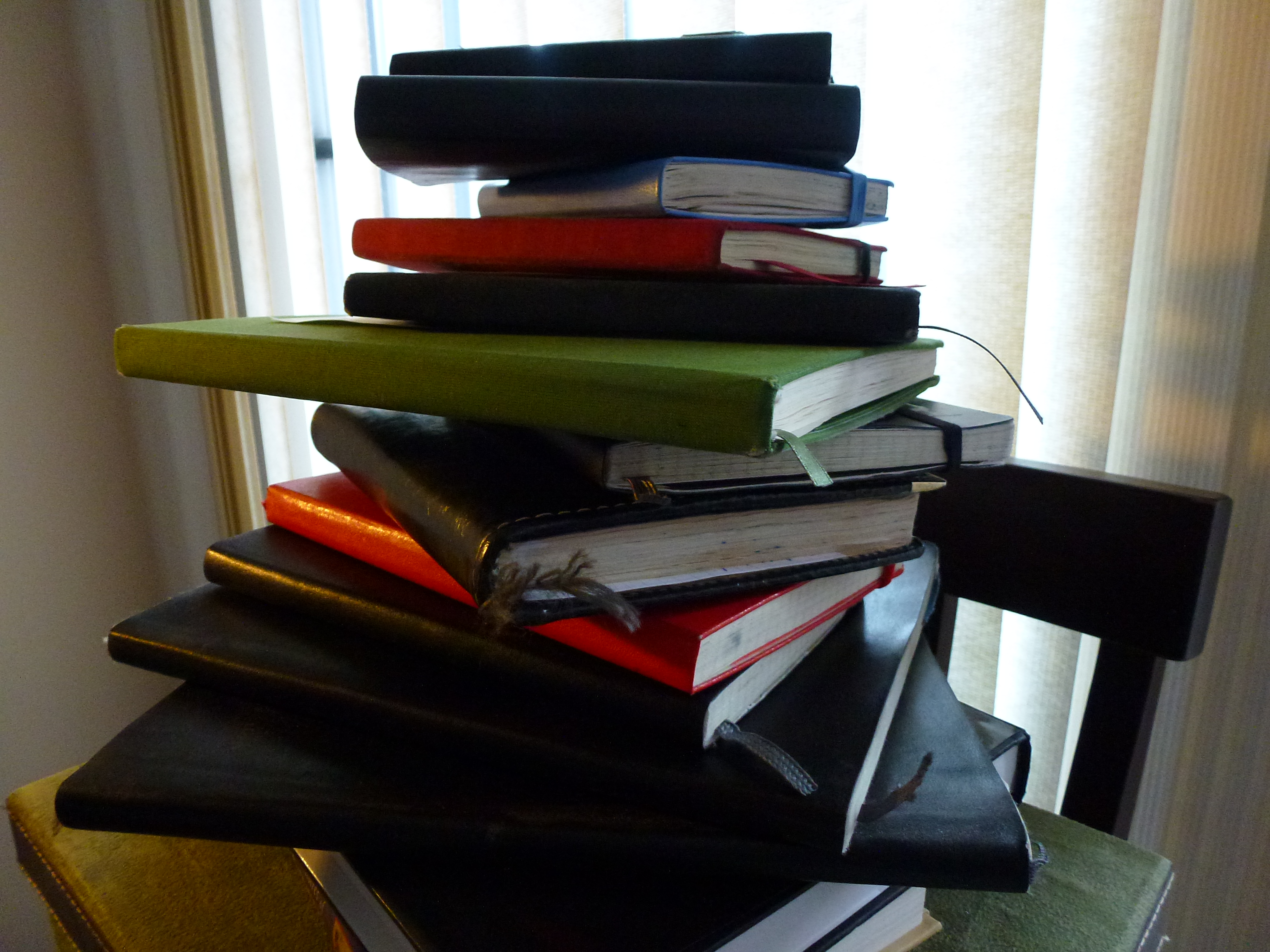
Some of my journals from the last two years. These are just a few of the hundreds I have filled over the years.
I have been an inveterate diarist since I was in high school, and that’s going back a few years now, let me tell you. I actually have one of my journals from 1974, when I was in Grade 12. It records among other things a trip my friend Richard Campbell and I took from Regina to Banff. Anytime I lose my mind and think about camping as a possible activity, I only have to go back and read that record of those cold soggy nights on the side of a mountain and I quickly come to my senses.
With a few holes, a few missing years, alas, I have a fairly complete record of my life that spans some 40 years recorded in hundreds of notebooks, containing probably close to 3,000,000 words.
Blake Brooker of One Yellow Rabbit Performance Theatre and I have talked about doing something with all these journals, some kind of interactive performance piece with them. I think all we’re lacking is any sense of urgency. Since we last talked about it, I’ve probably filled half a dozen more books. The possibilities would seem to be endless for such a piece. Want to know what I was doing on the day you were born? I could probably tell you. (Unless you’re older than me, but you’re probably not!)
These days, I am a regular fixture at Caffe Beano just off 17th Avenue SW in Calgary. I write in my journal there almost every day. When I am traveling, I look for new coffee shops that are conducive to the writing process. Last fall in Statford, I discovered Balzac’s on my first day there and wrote there every day for three weeks. I guess I’m a creature of habit, which is no small trick when you don’t really have a daily schedule.
David Mamet once wrote a great essay, “Writing in Restaurants,” which gave the title for a collection of essays. There’s something interesting about engaging in a very personal act in a public place, especially one you won’t get arrested for. I don’t pretend to understand the reasons why I am able to be so productive in a coffee shop, so much more so than if I stay at home to do the same thing. You can’t argue with results, and my coffee shop and restaurant output has been consistently prodigious.
Yet, in a way, that’s the easy part. The hard part is having the discipline to go back through them and mine them, as it were, for the gold they may or may not contain. In doing this, one is confronted with one’s past, which at times can be uplifting, while at other times and more often than not, simply deary, I’ve often noticed that we don’t tend to sit down and write anything when our favourite team wins a big game. But, get our hearts broken and that’s a different story. Unhappy events in our lives tend to send us scurrying back to the comfort of the written word, and so my journals, at any rate, tend to be a little on the dark side.
(If I had never had my heart broken, I might have 3,000 words instead of 3,000,000. That’s just how it goes.)
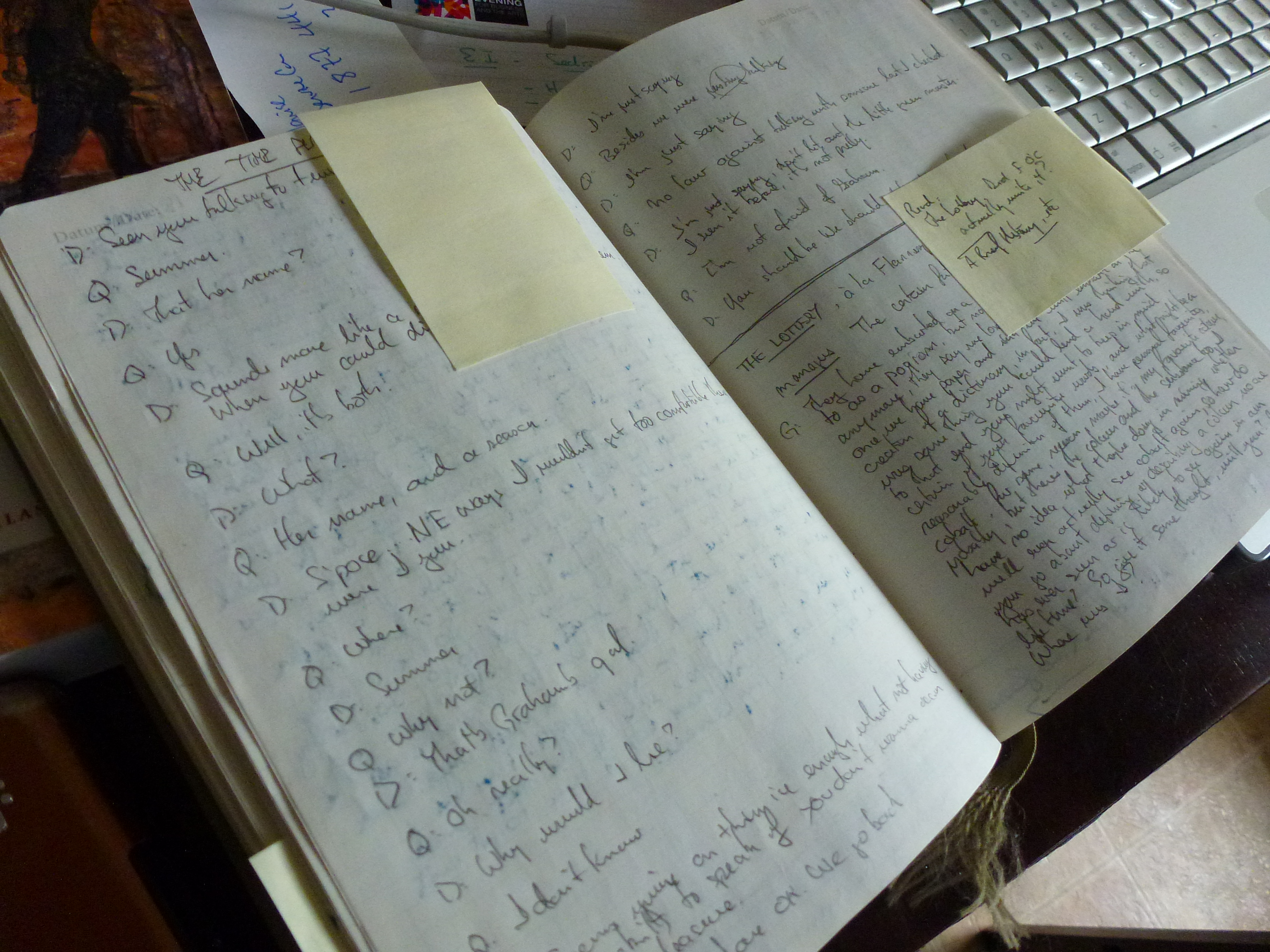
Along with the minutiae, the quotidian, as it were, we mine these journals for the poems and scenes of plays we may have written down on a rainy Tuesday afternoon, say, or late at night when we simply couldn’t fall asleep. These are a few pages from the notebook I kept in Stratford and wrote mostly while at Balzac’s:
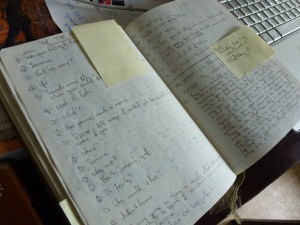
It's a scene from a play someone wrote. Oh yeah! It was me!!
Obviously by now, writing down my deep thoughts on a daily basis is second nature. It’s habitual and probably very therapeutic. But as I say, the hard part is going back through it to see if there’s anything there of interest.
This scene I’ve been looking at today seems like it might have some potential. There are about ten such scenes in this unnamed play that I called at one point “an epic fantasy,” yet there’s no actual title at this point So these days, cold days in Calgary when one looks for reasons to stay indoors, I am transcribing this raw material into my computer, with a wait and see attitude about what’s there. Is it gold, or fool’s gold? Too early to tell and no way to tell but to go through the process, hoping for the best.
Even though such scenes are written in full sobriety (for some reason I can’t write in bars) there are times when I go back and read them and have little or no recollection of having written them in the first place. What that’s all about, I’m not really sure, other than to say we clearly go into a very different frame of mind when creating, the results of which can be at some level unrecognizable even to ourselves.
And so now, it’s -30 degrees outside, yet I’ve been at this computer far too long. So even on a wretched day like this, I am to Beano to see what words are waiting on the page of my journal for me to draw out.
Thanks for reading! Stay warm!!
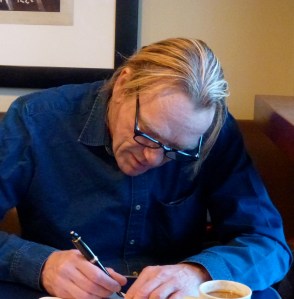
Writing stuff down in my new day timer in Caffe Beano.
Once upon a time in New York City, a wandered into a bar somewhere I guess in Midtown but leaning a little over to the Gramercy Park part of town. It was a quiet little place, but “authentic” on some level, so I stopped in for a beer on my way home. (Home was a grotesque yet “desirable” apartment in a tenement in the Lower East Side, but that’s another story.)
There was a game on the tv and a juke box in the corner and a couple of suits who had stayed too long after work and an amorous couple and a very large book-reading African-American man who, with me, was the only other person on our side of the bar, although on the other side of the bar there was a disaffected bartender working a tooth pick and reading the paper. He was at least kind enough to pour me a beer.
Suddenly, and for no apparent reason, my fellow bar-dweller slammed down his paper back novel, arose and announced in a booming voice to those of us thus assembled: I AM AN ANALOGUE MAN LIVING IN A DIGITAL WORLD!!!
There was a slight pause, a momentary silence as I suppose we all took in his message. And then he sat down and went back to his reading and life in the bar continued as before.
Yet I’ve never forgotten it, because it was like he had done that for my benefit. I, too, am an analogue man living in a digital world, which I proved to myself last week, this time vis a vis the question of daytimers.
You see, I have an iPhone and a MacBookPro with all the scheduling and calendar functions and the supposed automatic syncing by virtue of the Cloud. One would think I would be so organized and efficient as I entered this new year that I wouldn’t have a worry in the world. That I would, in fact, be all over it.
Well, after missing two appointments last week and only making a third because I happened to be in the place where it was supposedly happening. I realized that unless I write it down, I don’t don’t know it’s happening. I can push the buttons and rig the alerts and all the rest of it, but for some reason, unless I can see, in my mind’s eye, that page in my calendar on which I’ve notated the event — and when I do that I can see it so clearly it’s uncanny, right down to the colour of the ink — then I’m doomed to miss the event, blissfully unaware that it was ever meant to happen in the first place.
This has gone on for years. Every year, I think I can get by without one. Every year, at some point early in January, I find myself in Ried’s Stationers looking for the book I can live with for the next 50 weeks or so.
I should never schedule anything for the first few weeks in January, at least until I realize I have no sense of my schedule, of the demands being put on my time, unless I have written it down somewhere.
So, I now have a day timer and if you want to meet me sometime this year, the odds are now much greater that I will actually show up.
An analogue man in a digital world. That’s me.
Thanks for reading!










 eugene stickland