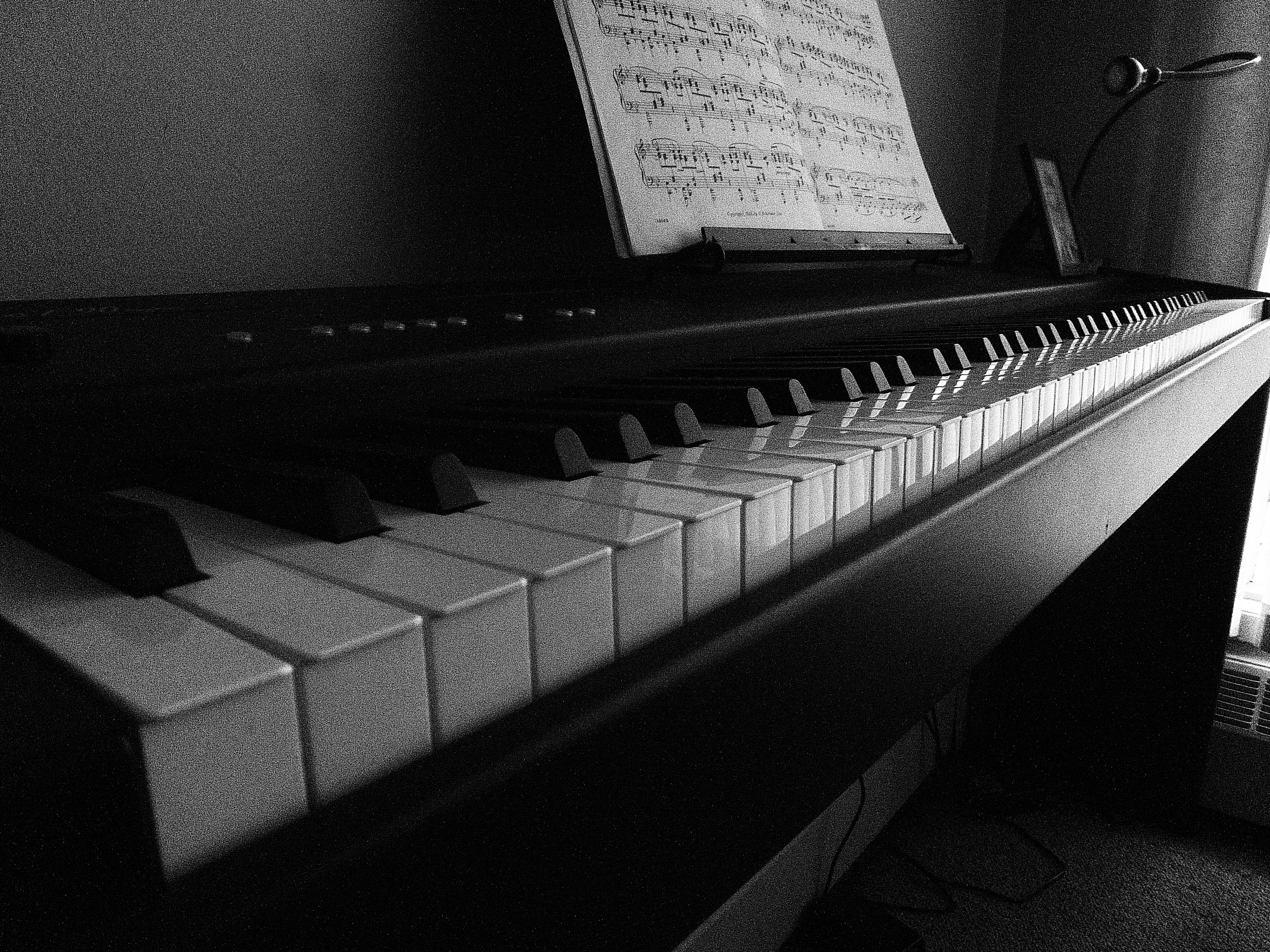
The music is the Brahms Op. 118 Piano Pieces, one or two of which I can kinda pretend to play, kinda.
PIANO
By D.H. Lawrence
Softly, in the dusk, a woman is singing to me;
Taking me back down the vista of years, till I see
A child sitting under the piano, in the boom of the tingling strings
And pressing the small, poised feet of a mother who smiles as she sings.
In spite of myself, the insidious mastery of song
Betrays me back, till the heart of me weeps to belong
To the old Sunday evenings at home, with winter outside
And hymns in the cosy parlour, the tinkling piano our guide.
So now it is vain for the singer to burst into clamour
With the great black piano appassionato. The glamour
Of childish days is upon me, my manhood is cast
Down in the flood of remembrance, I weep like a child for the past.
1918
_____________________
I’m sure this wonderful poem by Mr. Lawrence resonates deeply for any of us who grew up with a piano in the home. We had a huge old upright Mason and Rich in our dining room. My mom (born the same year that Lawrence wrote his poem) was a church organist and she loved to play. My brother Tom always played as well. Growing up, my life was filled with music.
I took lessons when I was young with the ubiquitous lady down the street, Mrs. Hanson. (With her twelve in ruler at the ready in case you got lazy with the position of your hands – and she wasn’t afraid to use it!) But I quit, who knows why, probably because it conflicted with baseball. How I got back to it is a cool little story and so here it is . . .
One night, it must have been in the early months of 1971, I was at a coffee shop in downtown Regina – the old Copper Kettle, for those who might know it. I’m sure I had a notebook with me, so you can see that my habit of writing in coffee shops goes back over four decades now.
A fellow I knew from school came in and joined me. I didn’t know him very well. He was a little older, and quite cosmopolitan, in my eyes. After all, he came from Edmonton which seemed exotic to me at the time.
As we left the Copper Kettle and walked towards Victoria Avenue, the Hotel Saskatchewan loomed into view. Graham grabbed my arm and before I knew it he was dragging me into the lobby of that beautiful old hotel.
“We can’t come in here!” I hissed. I probably did hiss it – after all, a couple of straggly rugrats can’t just waltz into the Hotel Saskatchewan.
“Relax,” he said. “I do it all the time.”
So we walked through the lobby, Graham in the lead as if he owned the place, with me following behind as if I was about to be arrested. We went into a sort of grand parlour, just before the dining room. It was a beautiful room with couches and overstuffed chairs and art on the walls and a huge chandelier suspended from the ornate ceiling throwing a golden light on everything. And in one corner, a grand piano.
Graham got a chair and opened the cover and began to play. I was astounded. I thought it was not only the most beautiful music I had ever heard, but really, it was so amazing that he could play like that. What a gift! And clearly, such a skill could get you anywhere in life – look where we were!
When he finished, he asked me if I wanted to play. I so desperately wanted to but I had to say I wasn’t able to. But I resolved then and there that I would go back to it, that I would take lessons again and learn to play. And I did. And I’ve been hacking and thrashing away ever since.
There have been times that I lived without a piano, but no more. That would no longer be possible. The piano I have in my apartment now, the one in the picture above, is a Roland F90 digital. It has a full keyboard with weighted keys and so feels and sounds like a “real” piano. The advantage is you can put in headphones and play all night without bothering anyone if you want to. The disadvantage is that if the power goes off, you can’t play the Moonlight Sonata by candlelight. Oh well, you can’t have everything.
I wonder for those of us who play a musical instrument if it isn’t some kind of life raft we crawl onto at some point in our lives when the waters are churning around us and everything seems particularly hazardous.
Some of us never crawl back off, I guess. And why would we want to, anyway?
I’m closing with this wonderful short film of the master, Vladimir Horowitz, reducing an audience in Moscow to tears. What a beautiful moment in time it captures!
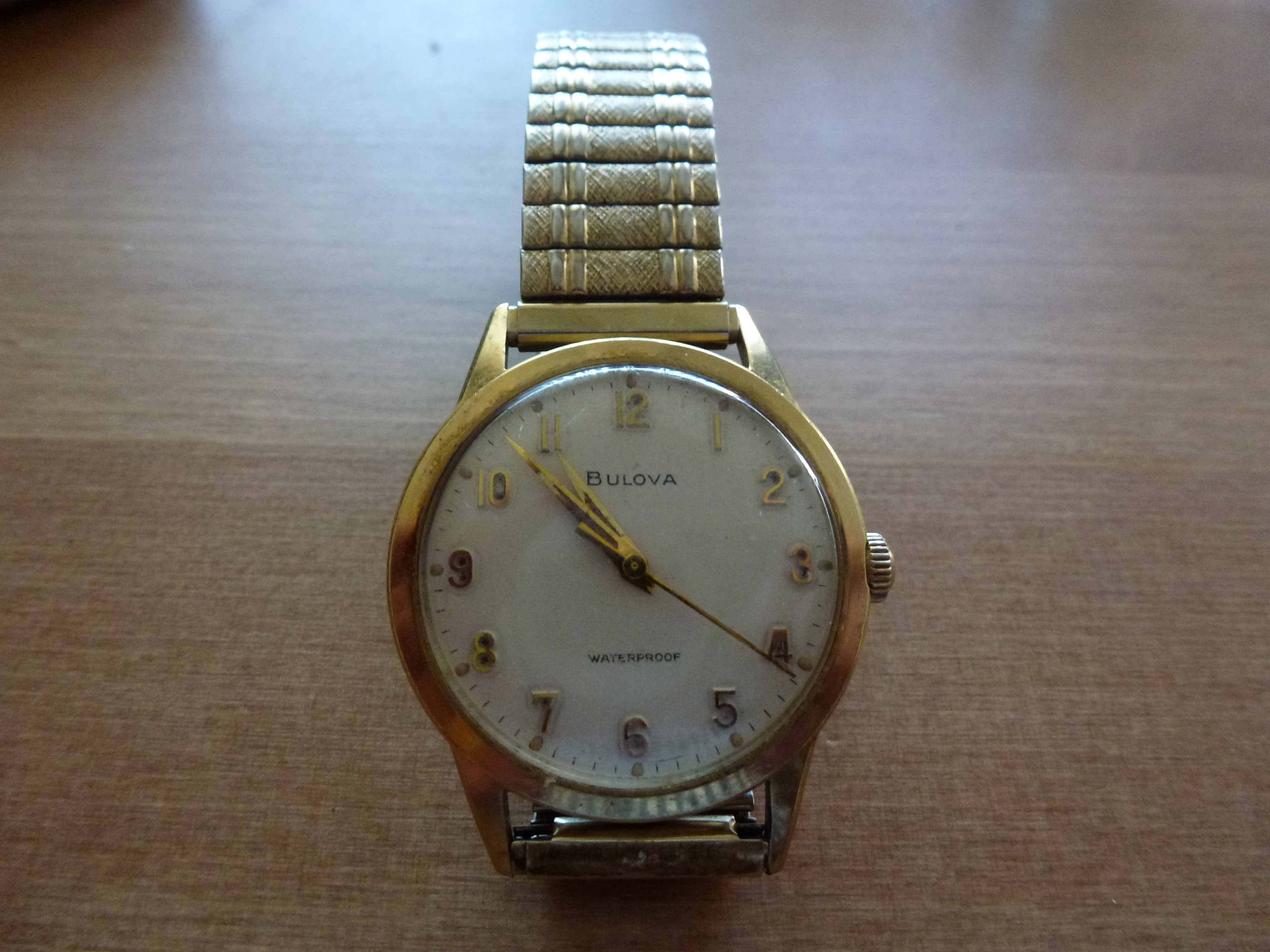
For all the years I’ve had this watch, I’ve never worn it.
This watch was given to my brother Gary Stickland in 1966 for, as is engraved on the back of it, “18 months of perfect service” by the Regina Leader-Post. He had a paper route back in our neighbourhood, and I sometimes was his helper.
I often present story structure to my writing students at a very basic, stripped-down level: Situation, Complication, Resolution. There, I just saved you the trouble of reading through countless lengthy tomes on story structure. The point is that in the story of our hero, there will always be hardship and obstacles to overcome before he can emerge, stronger and presumably successful in his quest, whatever that might be.
The complication in my own life story came in 1968 when Gary died in a car accident. He was 16, I was 11. Suddenly, the sweet serenity of my youth was shattered and the hard ragged edge of reality intruded.
It was a calamitous event for my family, one which in many ways my parents never recovered from. It’s true what they say, that parents should never have to bury their children. It’s the hardest thing of all. In my own case, it certainly put me on perilous footing as I was about to enter into my adolescent years.
I have no doubt that all discernible aspects of my character, good and bad, can be traced to this event. For example, I don’t like reality all that much, I really don’t. So I retreated into my own little world and surprise, surprise, I became first a musician and then a playwright.
A character in one of my plays (Dotty in Sitting on Paradise) says, rather famously in Calgary at least: “Change is never good. Nothing good ever comes of it.” People thought I was joking about that, but I really don’t think I was.
I can control things in the world on stage. Out in the real world I can’t. It’s probably as simple as that.
My brother was everything I was not. We were a study in contrasts. He was dark, and brooding, with my father’s deep brown, almost black eyes. I was a dreamy kid, with my mother’s fair complexion and blue eyes.
Gary was a doer, I was a thinker. He was a fighter, I was a lover. Or if not a lover at 11, I sure as hell wasn’t a fighter. He was about the body, I was about the imagination. While I played the piano, he played football and baseball, at a level that was so high and so far above anyone else that no one doubted for a minute that he could have made it to the pros in either baseball or football.
Sadly, I don’t remember much about him all these years later, but here’s one story I do remember and you’ll have to take my word for it that it actually happened.
I was playing Little League baseball for the old Senators team coached by Regina legend (and father to Chico) Joe Resch. I was not playing well, not well at all. I think Joe only tolerated me because I was Gary’s younger brother.
One evening after our game, I rode my bike over to the field where the Pony League played their games. I knew Gary had a game that night. As I pulled up to the screen, Gary was in the on deck circle taking some practice swings. He saw me and walked over to the fence so we could talk.
I felt so special that he did that, you have no idea. He asked me how my game went. I can’t really remember now how it went or what I said to that, but it probably hadn’t been all that good, at least on a personal level.
The batter went out or got a hit and so it was Gary’s turn to bat. He said, “I’ll hit a home run for you.” I said, “OK.” “Which field?” he asked. “Right,” I said. He winked at me and went up to home plate to bat. Three pitches later, he hit a home run over the right field fence. He rounded the bases and then waved at me as he went back to the dugout.
And that was that.
That was my brother Gary, as I remember him at his best.
What even to say about it? Maybe it brings back memories for some?
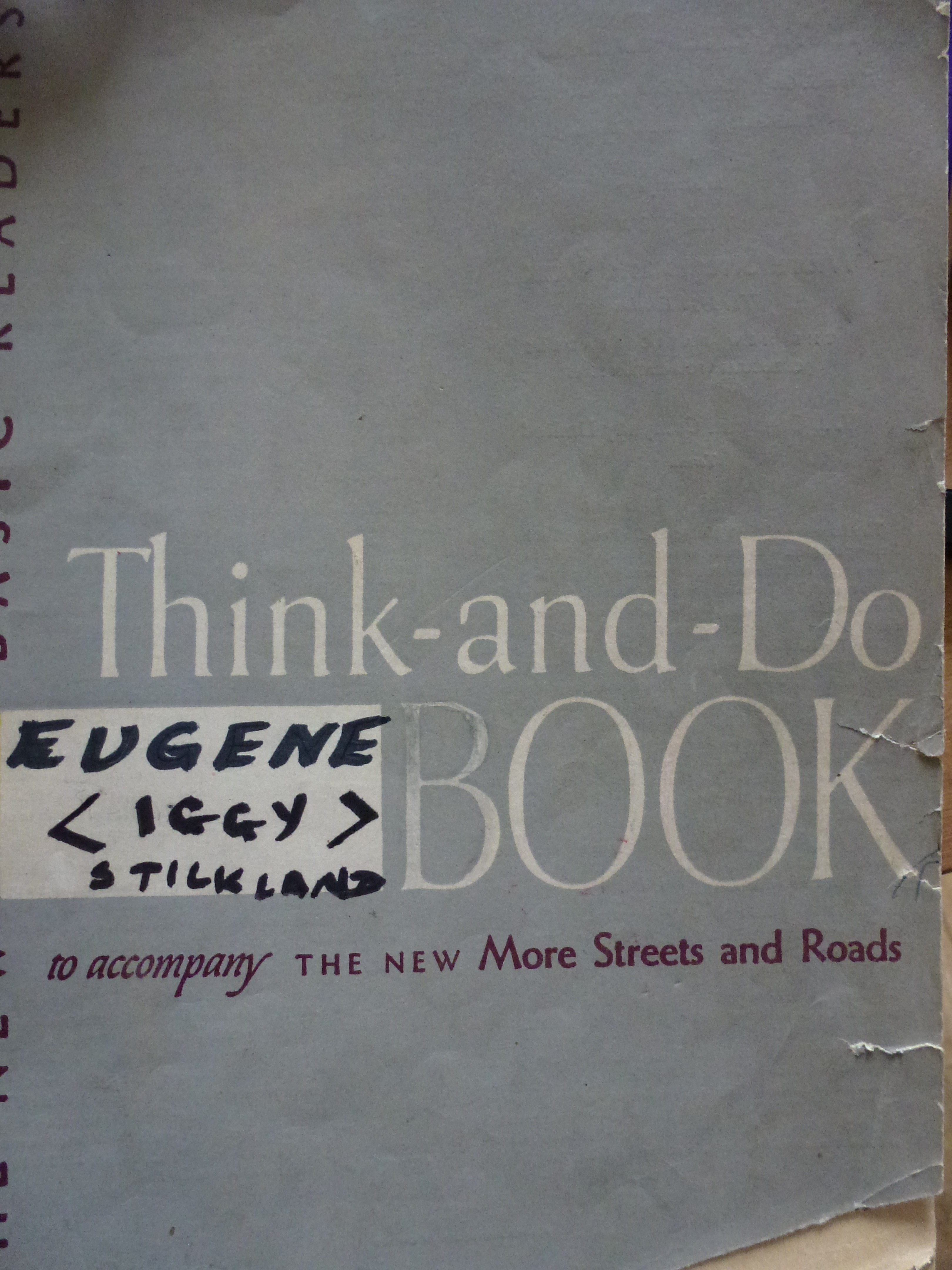
I don’t have many other things from this time in my life. For some reason, this book has always followed me around. It documents some of my early explorations in reading and writing. Although I was never the greatest or most disciplined student, all the exercises in this book have been completed and by and large I did quite well.
My name on the cover strikes me as being very unusual. Back in those days, I was known as Gene, not Eugene. My first wife (I know that sounds bad; it reminds me of Robert Browning’s “My Last Duchess”) Marguerite is solely responsible for the Gene to Eugene transformation but that didn’t happen until I was in university.
As for . . . Hmmm. Another mystery. The only person ever to call me that – and I’m sincerely hoping it stays this way – is my sister, Sharon. She still does, in birthday cards and Christmas cards and occasionally on the phone. But no one else has ever called me Iggy.
I can only conclude that my name was written on the cover long after the time that I was actually working in this book, which according to extensive research (Wikipedia) would have been in Grade 3, which I believe was in 1963.
This Think-and-Do Book, it tells us on the cover, was meant to accompany The New More Streets and Roads, which was a reader we had back then, putting us firmly into Dick and Jane land. I would reckon that most people in Canada around my age learned to read and write thanks to Dick and Jane.
And of course Spot, who, my research tells me, began his literary existence back in the 1930’s as a cat, but morphed into a dog sometime in the ‘50’s. The things you learn!
Those of you who are up on your pedagogical theory will know that by the late 60’s, Dick and Jane and their tight, white little world came under very serious scrutiny by educators who were worried that such books served the white middle class patriarchy, and what we were really being taught was how to be good tight white little citizens who could presumably read and write well enough to keep the whole thing going for another generation.
I’m not sure that I totally agree with that. I can’t remember the content of those readers back then beyond the famous “See Dick run” and all that nonsense. But I have to admit that the books would not exactly have captured the imagination of anyone from a different culture, with other than white skin, or any of the little girls with aspirations beyond growing up to be decorative.
Looking at this book today, I am reminded of what a different time it was and just how different things were back then. In grade 3, we would come a little early to play on the playground which was segregated with the boys on the boy’s side, the girls on the girl’s side. And ne’er the twain shall meet. Until we got inside, go figure.
Once inside the classroom, our day began by saying the Lord’s Prayer followed by the singing of God Save the Queen. Thus purified in the eyes of God and the Queen we were ready to get down and tackle the 3 R’s and all the rest of it. But God (or the Queen) help you if you were caught whispering to a friend or if you needed to pee. Things really were strict back then. The principal was armed with a strap and he wasn’t afraid to use it.
The school I am referring to here specifically is Albert School in the old north end of Regina, Saskatchewan. The beautiful old brick building that I went to was torn down a number of years ago and they put up an ugly modern thing in its place.
Beyond that, the neighbourhood underwent a profound change in character when our First Nations people moved in, and just as quickly the white working class people moved out.
It has since been described by Maclean’s Magazine as the worst neighbourhood in Canada, which is no small accomplishment. Very little is said about this. Regina and other prairie cities continue to have huge racial issues that never seem to be resolved.
When I returned to Regina in the late 80’s after living and going to school in Toronto, I taught for a while at what was then the Saskatchewan Indian Federated College, now the First Nations University of Canada. Some of my friends from the old north end didn’t understand. They felt, some of them, that I had betrayed them. The lines here are drawn very deep. It’s obviously a very complex situation.
But when I look back at the old neighbourhood now, it all seems rather dreamy and bucolic.
In many ways, it was a good place to come from, but I don’t know that I’d want to go back now.
Looking back to 1963, I amazed at all the great music that came out that year. Here’s a sampling . . .
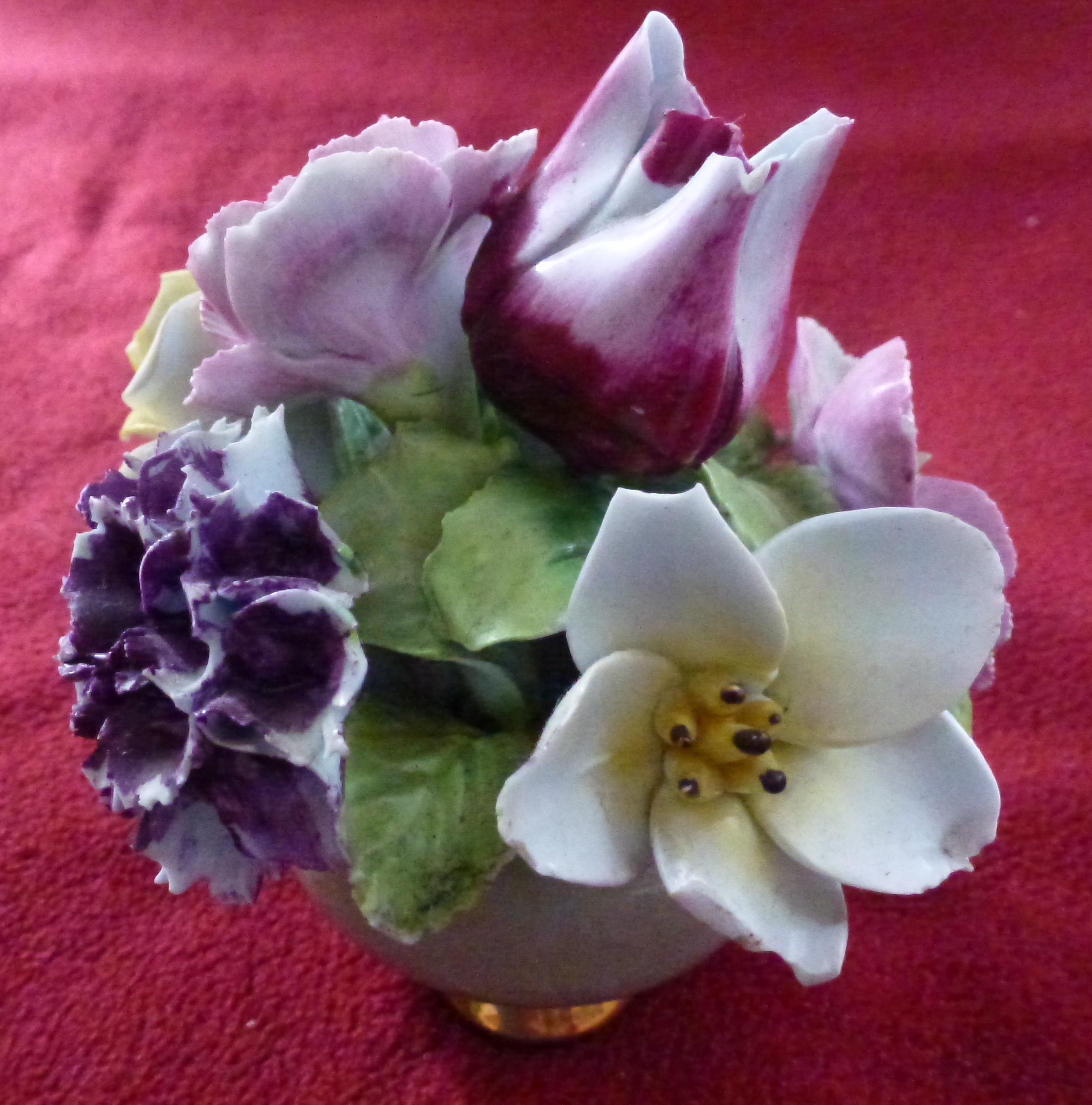
This thing belonged to my grandma and when she passed away, my mom took it and when she passed away, I ended up with it. It’s about 4 inches high and it’s rather heavy. Also, the flower petals have very sharp edges – you can almost cut yourself on them if you’re not careful. This is a standard old lady knick knack if ever there was one. I don’t like it, aesthetically, but as it reminds me of my grandmother, Edith Hunter (neé Arthur), what can I do but hold onto it, maybe even cherish it at some level?
I have written before on this blog about my relationship with my grandmother, so I won’t go over that same ground again. (Please see “A Visit to Grandma’s House” posted in February of this year.) But in that post, I refrained from telling what I think is a very interesting story about her and how the family ended up on the prairies, so here it is now.
Early in the last Century, around 1907 I believe, grandma’s father and brothers took advantage of the Homestead Act and went out to Saskatchewan to farm a quarter section of land. (This was in the Alsask area, for those of you familiar with the great metropolises of the Canadian prairies.)
Grandma and her mother stayed home back in Ontario, in the town of Ancaster, which I believe is now a part of Hamilton but was then its own dreamy little village. Both were school teachers, and very fine ladies from what I understand. Teetotalers, even. (I know it’s hard to imagine that I come from such pure and virtuous stock, but I do.)
To give you an idea of the two of them in action, grandma told me that one day around this time she and her mother went out to make their calls on a fine Sunday afternoon, but then were forced to hurry back home when they realized they had left home without their white gloves. Scandalous behaviour!
Grandma’s mother was very suspicious of this western movement of the family. She had hoped her husband would come to his senses and return to Ontario after a summer, but he and the boys seemed to be staying put. And then one fateful day, there came a letter in the mail from the wilds of the western hinterland requesting that the girls pack up the house and come out and join them.
Great-grandma was having none of this, and so she dispatched my grandma on a recognizance mission to find out first hand just what it was like out there. At the time, this meant traveling down through the United States to St. Paul, Minnesota and then taking a spur line up into Canada.
It’s hard to imagine a young Edwardian lady heading out on a journey like that, with her envelope of money pinned up inside her petticoat, but she did it. The train dropped her off at a very lonely crossroads in the middle of the vast prairie, not a building in sight. And there were her dad and brothers waiting for her on a buckboard pulled by one gigantic horse.
Grandma loved it. She had the time of her life, and soon enough returned home to her mother singing the praises of the prairies. This was the promised land, Shangri-La, Valhalla, Eden . . . take your pick. She convinced her mother to make the move, and her mother – against her better judgement – acquiesced.
And so the next summer, as my grandma presented it to me when I was a wee lad, she and her mother packed up the fine china and crystal and linens and the piano and everything else and took that same train down through Minnesota and then up into Saskatchewan.
They were dropped off at the same lonely empty crossroads, along with all of their earthly possessions. There on the buckboard were my great-grandfather and my great uncles.
Can’t you just hear the drone of the mosquitoes and the buzz of the grasshoppers and feel the heat of the sun beating down on them . . . and sense the deep endless silence beyond . . . that relentlessly vast and empty space, the big bowl of the sky, high white clouds drifting by, thousands of miles from civilization?
Grandma’s mother took it all in, ever so slowly slumping to her knees on the dirt road, in her white dress and her white lace gloves. She began to sob, pounding her white-gloved fist on the dirt road moaning, “No . . . . no . . . no . . .”
Grandma said you could see little puffs of dirt rise up each time she hit the road with her fist.
I guess great-grandma didn’t like it out west so much. As far as I know, she never really did come around.
I don’t know . . . maybe this little vase once lived on a shelf in that stately old home in Ancaster. Maybe it made the journey out west with my grandma and her mother.
Honestly, it’s one of my least favourite objects, but as it reminds me of one of my favourite people of all time, my dear grandma Edith Hunter, here it will stay as long as I have a shelf to put it on.
Thanks for reading!
Here’s a little gem I found looking for something from this era to share with you . . .
Not the greatest photograph, sorry. But you get the idea.
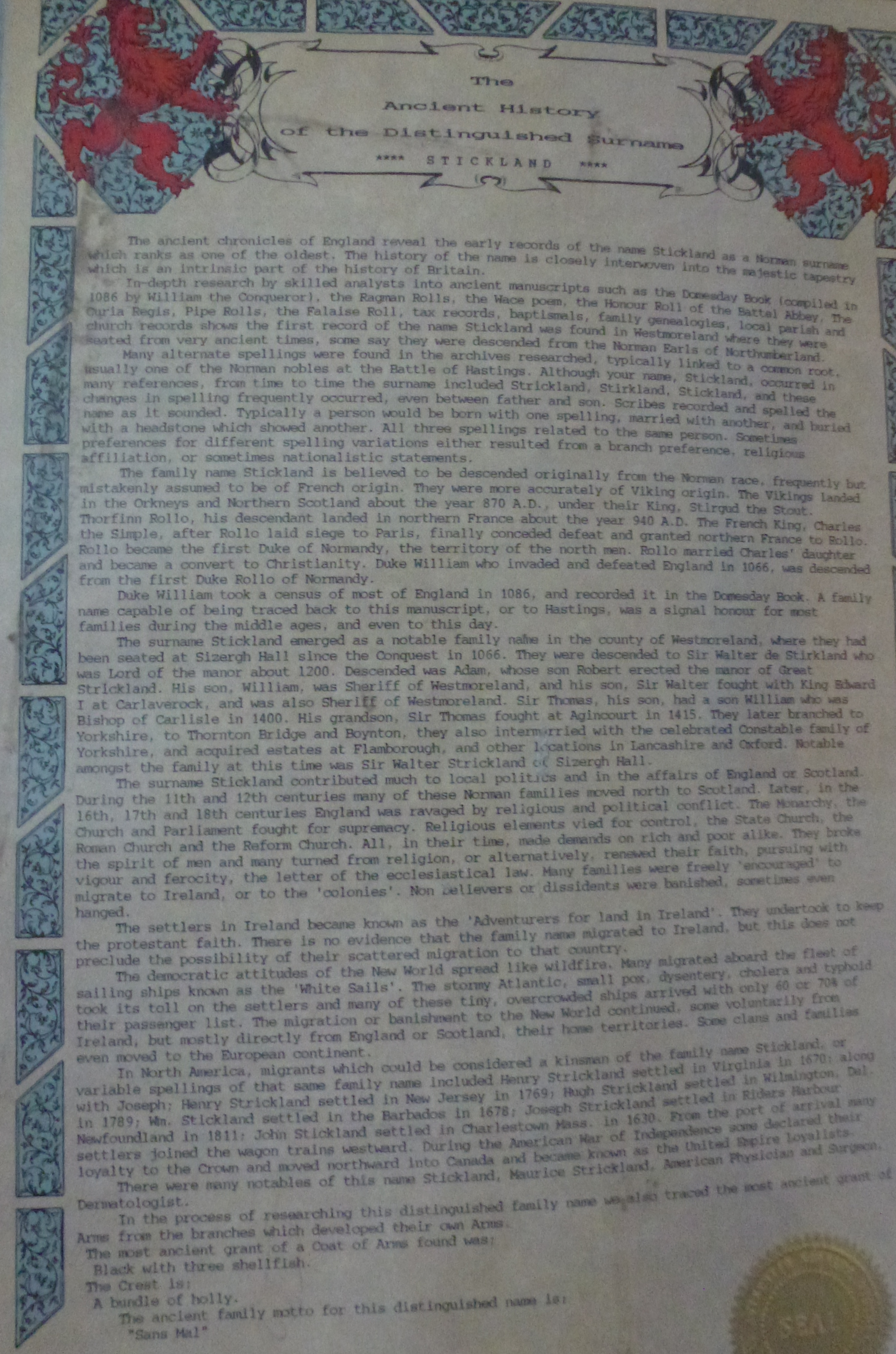
This object is one of those things that I simply can’t bear to throw away. My father ordered it, probably because he saw an add on television and imagined that with its authority, he could put the whole Stickland – Strickland debate to rest once and for all. (As I type these words in Word on my MacBook Pro, I notice that Stickland gets the red underline, Strickland does not. Clearly, like my father before me, I am fighting a losing battle.)
It is 11” x 17” and looks credible at first glance. But the fact that the word “SEAL” is embossed into the gold seal makes me a tad suspicious. Isn’t that a tad redundant? But this was created in the days before the internet, and so the amount of research that went into it, evidenced by a copious bibliography printed on the book, makes it seem fairly credible. It would take you five minutes to find this out in the internet nowadays. This document was created on just the other side of the digital revolution.
What the scroll tells us is that the name of Stickland, and its derivatives such as Strickland, goes back to very ancient times –it’s actually a Norman name, so puts my daddy’s family way back to the time and possibly in the company of William the Conqueror when he roared into England, back in 1066 and all that.
My mom’s side, the Arthurs, go back even further. They were the ones waiting for the Conqueror in Hastings almost 1,000 years ago saying “Welcome to England.” While I have some Scottish blood in there as well, and even a dram of Irish, my pedigree is quite secure on the English side.
My paternal grandfather immigrated to Canada in the early part of the last century. He was a blacksmith in the small community of Maryfield. Saskatchewan. My mom grew up on a farm near Broadview, just up the road. Somehow, improbably, proving once and for all that opposites attract, they met and married and hence the writer of this blog was brought into the world.
My mom and dad grew up in a Canada that was very much a British colony. We had a photo of the Queen of England on the wall in our dining room when I was growing up. A typical Sunday dinner would have been roast beef and Yorkshire pudding on Royal Albert china. Dad dressed for these meals and we children were allowed to be seen and not heard, elbows on the table was considered a serious crime, the tv was nowhere in sight, and one didn’t leave the table without first asking to be excused. Etc.
While a Brit at heart, my dad was a fierce Canadian. He loved this country with all his heart and soul. Well, I should qualify that. He loved the English version of this country. He didn’t care for the French, but this animosity was directed mostly into hockey: the beloved Maple Leafs vs. the damned Montreal Canadiens.
I know it’s easy to castigate the English, but I am proud of my English ancestry. I love my Arthurian cousins still living in England, although born here, on Vancouver Island. The history of imperialist Britain I know can be brutal and arrogant, but I can tell you that my dad was one of the kindest and most principled men I have ever known.
I’ll give you an example. (I think this also happened to my brother, Tom.) When I was twelve or thirteen or so, my dad came into my bedroom, which he never did, smoking his pipe, which he always did. He sat on the side of my bed, looking around like he was, as they say, an anthropologist on Mars, with great plumes of blue smoke emanating from his pipe.
Dad was laconic, to say the least. A man of very few words. There was an extremely long and awkward silence as he composed himself and chose his words.
Finally, he said: “You know what a gentleman is.”
I said I did.
“When you’re around girls, which you will be now, always try to be one.”
That was all. And that was my facts of life speech, I guess.
I’ve tried to live up to my dad’s advice. I think I’m getting better at it the older I get. I hope I am.
Finally, I would say about this parchment that I will never be able to throw away — the implication that the Sticklands were Normans and may well have originated in France could not have been welcome knowledge to my dad. Be that as it may, it would seem to be so.
He didn’t exactly brag about the contents of this document, but I guess in my own way I am doing it for him now.
Thanks for reading.
Here’s my favourite English song I could think of . . .
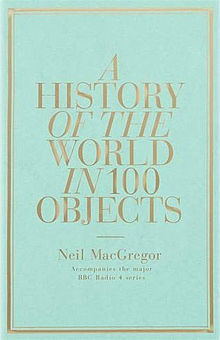
I have just finished reading Neil MacGregor’s excellent book, A History of the World in 100 Objects. MacGregor is the director of the British Museum, where all of his 100 objects can be found. The book is beautifully illustrated with photos of each of the objects and then some. It is based on a series originally done on BBC Radio 4.
If you have any interest at all in the history of mankind from 2,000,000 years ago (Olduvai stone chopping tool) to the present (solar-powered lamp and charger), this is a good book for you to lay your hands on. There’s a paperback version, but it doesn’t seem to have all of the illustrations in it so I recommend getting the hard cover version, which is published by Penguin (2010, $42.00).
For those interested generally in the subject of anthropology, this book is very, shall we say, digestible. It is written in bite-sized bits, I suppose to fit the original radio format. It offers a small but lucid glimpse into different times and places. One feels a whole lot smarter after reading this book, if I do say so myself.
The idea of using objects to talk about history, I find, is very effective. It seems to objectify a time and place in a very efficient manner, reminding the reader always that we are all part of the great human family that stretches back in time over 2,00,000 years.
I’ve been thinking about objects, the things we have, for a the past few weeks as I’ve watched the people in Calgary who were hit by the flood having to divest themselves of most of their possessions. I have heard it said before that we consumers are only intermediaries between the store and the landfill, and that we even pay for the privilege of being so. Never has this seemed so apparent as now.
A lot of people choose to surround themselves of a lot of things, a lot of objects. Looking at it when it’s all piled up, wet and soggy and smelly and misshapen, covered in river silt, house after house, street after street, it really does beg the question, “How much stuff do we really need?”
Be that as it may, I’m not criticizing anyone who has just survived a flood. It’s realy a very horrible experience and my heart goes out to all my neighbours who have had to endure this catastrophe. And yet, it’s probably safe to say that many of us in North America tend to have a lot of stuff, to the point where one could legitimately ask, “Do we possess our possessions or do our possessions posses us?”
I almost wonder if there’s a sense of liberation that comes from losing a lot of it, and whether people who have weathered this storm will choose to live in a more austere fashion in the future. Hell, maybe they’ll go back at it with renewed vigour and zeal, I guess we’ll find out. Time will tell.
On any account, between the book and the flood, I looked around my own apartment and asked myself what is really important here, and what isn’t. There’s an old after-dinner question that goes, “If your house was on fire and you could only take one thing with you, what would it be?” It is very telling about a person’s true nature as to how he or she answers that question.
And so, I wondered if it would be a useful exercise for me to look for not one but 10 (but not 100!) objects in my apartment that I could use to tell my own personal history, in the same manner in which MacGregor tells the history of the world with his 100 objects. So to that end I’ve been looking around my apartment the last couple of days, for the first time in my life taking a long, cold look at the things I surround myself with, asking myself what they have to do with me and my story, if anything at all.
The list I have come up with is quite surprising, even to me. So, what exactly is this list, you might ask? Well, dear reader, you have to wait for it. Because it’s my blog and I can do what I want to, tomorrow I will begin a series of ten pieces on ten objects in my apartment that I feel tell the story of my life. I plan on doing this in ten days. We’ll see if I manage to pull that off or not, given that I have no one other than myself to give me a hard time about deadlines.
I think this is an interesting project — I hope to others besides myself — and I hope you will check in and see what things I have on my list and what I have to say about them.
In the meanwhile, I encourage you to look around your place, at your stuff, and figure out for yourself how your own stuff reflects or even defines who you are.
Thanks for reading. Happy Canada Day! See you back here tomorrow.
Here’s Oscar Peterson with my favourite Canadian song of all time, eh . . .
The Bow River under Crowchild Trail just west of downtown.
I am writing this post partly for the sake of my readers who don’t live in Calgary, but I hope it will be of interest to those who live here as well . . .
As you may know, I live in Calgary which is a largish city (for Canada at least) located at the western end of the Canadian prairies, in the foothills of the Rocky Mountains. It is the centre of the oil and gas industry in Canada and so it’s one of Canada’s wealthiest cities.
The residual wealth that trickles down from oil and gas has actually helped to create a thriving arts and culture scene here, which I like to refer to as the art patch as opposed to the oil patch. As you can probably guess, I identify more with the latter than the former of these patches.
Generally speaking, the people in the two patches don’t always get along so well. They (oil) seem to think that we (art) don’t work and we (art) often think that they (oil) operate without any evidence of a soul.
This dirty roiling mess is usually quite placid beautiful blue-green water from the mountains, some of the nest trout fishing anywhere.
But, we do share the same geographical area, one of the features of which is the proximity to the mountains. Banff, for example, is just over an hour’s drive west of here.
Two rivers (in particular) originate in the mountains and flow down through Calgary, the Elbow and the Bow. The Elbow flows into the Glenmore Reservoir in the south part of town and it is from here we get our drinking water. It then flows north and east from the reservoir up through some of the finest neighbourhoods in the country and meets up with the larger Bow River just east of downtown, which is the site of Fort Calgary.
A few days ago a number of forces came together to cause these two rivers to flood in a way no one here can ever remember happening before, not like this. Those forces included the melting snow pack in the mountains along with a record rainfall in the mountains, the foothills and in Calgary. All that water has to go somewhere and it all went into the two rivers which soon flooded their respective banks, leaving large areas of the city underwater, causing the evacuation of tens of thousands of people.
Although I live nowhere near either river, people in the block east of me were evacuated yesterday (Friday) not so much because of the water but because there were problems with the power grid and so the power was lost for a number of apartment buildings downtown, hence the evacuations.
It’s like it’s boiling.
Obviously, the situation wasn’t as dire here as for people living along the rivers. Some of them lost everything, and all of them have a horrible mess to return home to.
All of which brings me to my point about the amazing spirit of generosity that flowed through our city as a result of this situation.
I first became aware of it on Thursday evening when the shit really hit the fan and we all began to realize how serious the situation was becoming.
I was following events as they unfolded on Facebook. The updates on there turned out to be more comprehensive and current than anything I could find on television. I watched in disbelief as news spread of neighbourhood after neighbourhood being evacuated. Some of them were only a few blocks from my apartment, and all of them were places where friends of mine live.
What followed was truly extraordinary. Friends on Facebook, those on higher and drier ground, began offering a place to stay for those who were facing evacuation. I wish I had counted how many offers I saw on Thursday night and Friday, honestly it was in the hundreds.
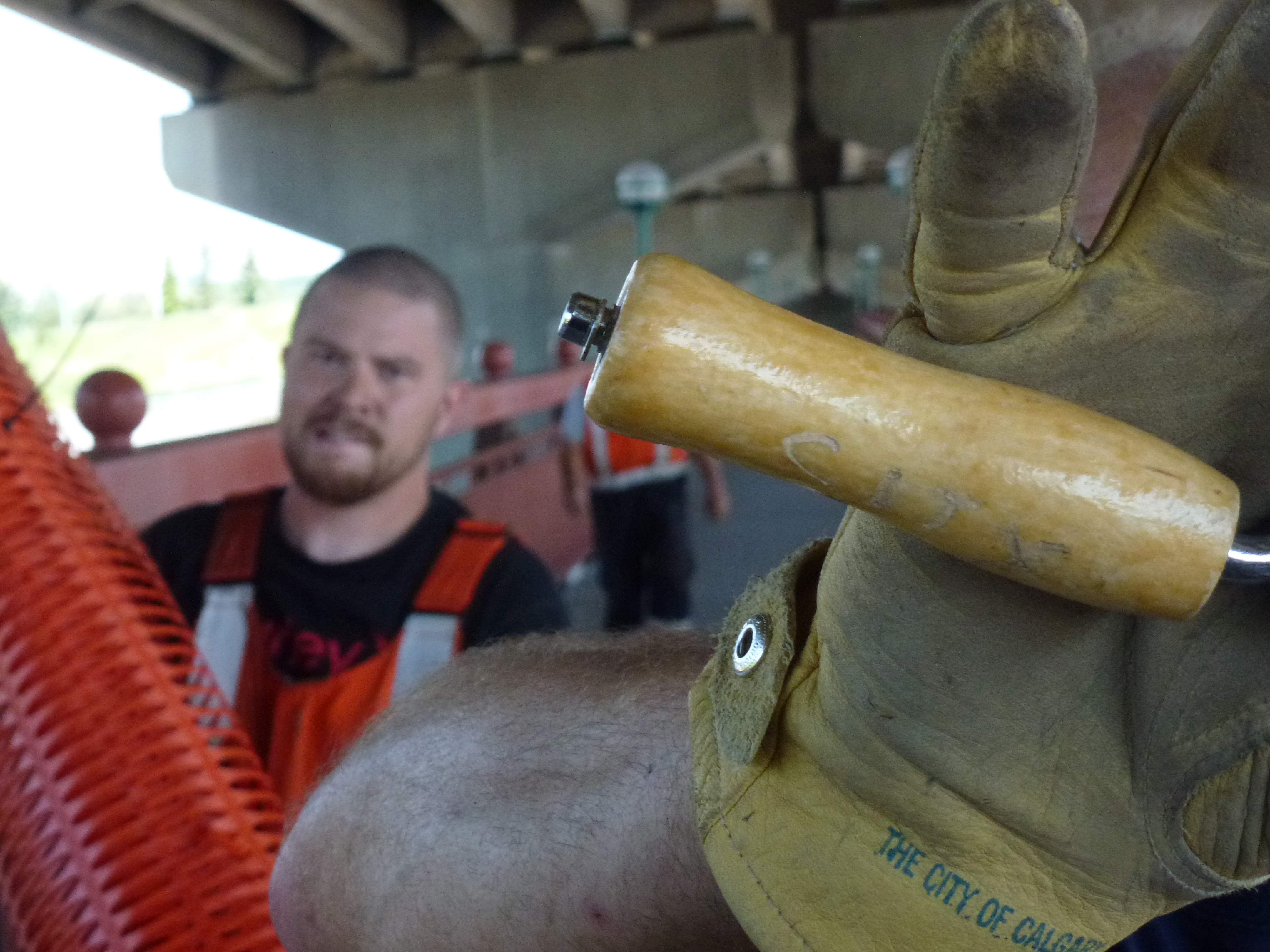
Then the city workers arrived and bade me to desist.
Not only that . . . people were offering to drive and pick up the evacuees. And not only that! Many were sweetening the pot with offers of food, wine, beer, you name it! People with yards were even billing themselves as “animal friendly” for those with pets.
This generosity was so spontaneous and overwhelming that in a few cases I seriously contemplated pretending I’d been evacuated just to have a little free vacation at someone else’s house. Of course, getting busted on something like that is something you would never live down so I rode the storm out on my own. I even offered a room at my place for anyone who needed it.
After all, I had beer and vodka, coffee and smokes, and a little water. I knew I’d be OK.
And in the end, you know, it didn’t matter much which of the patches you came from or which side of the river you lived on, the people of this fine city came together in a truly inspirational expression of community that for some of us – certainly for me – reminded us why we live here in the first place.
Reminding us, ultimately, that’s there no place else in the world where we would rather live.
The rains have subsided but the rivers are still high. These photos of the Bow River were taken today (Saturday).
There’s a hell of a mess left to clean up, but we’ll get through it, and maybe even be a little richer of a community for it.
In closing, a little number from one of my favourite Calgary-based musicians, Tim Williams, who had a health scare during the flood and had everyone worried but it looks like he’s going to be fine. This is Harrison Lake in BC you’re seeing in this vid, the flooding’s not that bad here . . . not yet . . .
This photograph came to the Eugenius archives today thanks to the little boy you see on the right, my oldest friend in the world, Roy Lyster. Since that photograph was taken in the early 1960’s, Roy and I have gone our separate ways, but in the true manner of old friends, we check up and check in every now and then. Roy was in Calgary last week and we had a lovely evening together.
And now, looking at this photograph that Roy sent out of the blue today, I am in awe that I have been blessed to have such a truly wonderful friend in my life all these years.
I mean, look at us! Could we be more happy!? Is there any place we would rather be than in each other’s company?! I think not.
A few comments on the photo, some 50 years after it was taken . . .
I believe the photo was taken near Roy’s house on the 16 block of Athol Street in Regina. This area has since become, according to Macleans Magazine, the worst neighbourhood in Canada, but it seems pretty damned leafy and safe in this photo. And it was. It was a good place to grow up.
I’m not sure what Roy is doing wearing those high-waisted jeans, but he was always a little ahead of the rest of us fashion-wise. I can’t help but notice that I am wearing a cardigan, which I still do, and am wearing what appears to be Chuck Taylors, which I still wear, and I’m obviously riding a bike, which I still do. Have I not come anywhere in over 50 years on this planet? Have I not evolved? It would seem not.
But as they say, if it ain’t broke, don’t fix it.
Further to my wardrobe, you notice I am not wearing jeans, like Roy is. My mom was wont to dress me up a little bit. Legend has it that she insisted my hair be kept long and she liked to dress me in little outfits, pinafores and such. One day my dad was out with me and someone asked him how old his little girl was and that was that. Dad took me to a barber and cut off all my curls. Mom took to her bed and cried for days. I still have an envelope with those curls in it. So I notice I have on dress pants in this photo, which doesn’t really surprise me.
Notice too that I am on a girl’s bike, and with a basket, yet. And notice how gigantic Roy’s bike is in comparison. Roy’s bike even has one of those old school generator and light gizmos. Talk about high tech! I can’t believe he could ride that thing without damaging himself! But why would I have a girlie bike with a basket like that?
The simple answer to that is that I at least had a bike, and, I’m sure, was glad to have it. My parents were hardly wealthy. Neither were Roy’s. But they provided us with what we needed, and we were obviously happy little boys.
Today, the little boy on the right in an immensely talented and successful man, you can read up on him here: http://people.mcgill.ca/roy.lyster/. And elsewhere. And you know about the other boy in the photo. Whatever was going on in our young minds that day almost half a century ago when we set out for a bike ride together, it must have all been good, and our little minds were free and clear to dream big dreams.
One night, a few years after this photo was taken, when we were thirteen or so, we were at a party and Roy had the Old Friends album by Simon and Garfunkel. I remember we wondered that night so long ago if we would be friends like Simon and Garfunkel so beautifully sang about. Well, we’re not 70 – yet – and we’re not sitting on a park bench – yet – but it seems we are destined to be friends to the end. I hope so.
I found the song and share it with you here.
So, here’s to old friends, my friends. Remember the old saying:
Well, well, well. Would you look at that! Just when you thought our streets were safe, who should come skulking around here again but Mr. Grumpypants with another first world atrocity to share with us all. Take it away, Your Grumpiness . . .
Thank you, Eugenius.
Meine Dame und Herren. Mesdames et Messieurs. Ladies and Gentlemen, thank you for taking the time to read my guest column on the Eugenius blog here. Though I don’t mind telling you that I am still awaiting payment from the first post I wrote which was months ago. Does the administration of this blog think I live on air or something? What the hell’s wrong with people, Krisake . . .
On any account, there I was in Safeway. Minding my own business as usual. I was in the eggs and dairy aisle, lovingly fondling the various tubs of yoghurt. A woman of indeterminate age and, I might add, rare beauty, was beside me, so to speak, likewise engaged.
I was caressing a big firm tub of OLYMPIC CREAMA while she was going back and forth from tub to tub of inferior yoghurts, clearly befuddled and unable to make a final decision. She seemed particularly interested in a blue tub of Greek stuff that I had tried myself and found to be wretched. And so what could I do, what choice did I have, I intervened.
“My lady,” I crooned, in dulcet tones, “Do yourself a favour. Forget that stuff, I’ve tried it, it’s no good. Get yourself a tub of the OLYMPIC CREAMA. It’s simply the best. It will change your entire notion of what yoghurt really is.”
“Is it really that good?” she asked?
“It is, it is, it just makes everything else taste like puppy doo doo.”
“Well,” she said, “That’s good enough for me. Thank you.” And she took a tub of CREAMA and put it in her cart. Decisively, if I do say so myself. She gave me a meaningful look, and then shopped on, as did I: she to eggs, and me to cheese.
End of story, you would think. But no. Oh no. Oh no no no. A few minutes later, as I was looking to take my place at one of the checkouts, there she was, hauling a tub of the blue shit I had warned her about onto the conveyor belt. She had obviously slunk back to the yoghurt section when I was out of sight and put back her tub of CREAMA and taken a tub of this inferior blue goo instead.
WTF?!
What can you even say to this type of underhanded skuzzy behaviour? We had a pact, an agreement. We had had a moment. For no personal profit or gain of any kind, other than the satisfaction of helping a fellow human being, I had GONE OUT OF MY WAY to help this thankless hussy and what does she do??? She sneaks back around and makes the old switcheroo.
A low point, a black day, in the history of cooperative shopping, to say the least.
In my mind, I made my way through the lineup behind here and I picked up that blue tub of rancid yoghurt and held it up to her face and screamed: “AH ha! Caught you! You heartless thankless JEZEBEL! You low and vile worse than crawling THING! How could you?!?! How could you do this to US???????”
And then triumphantly made my way to the fruits and vegetables aisle to compose myself. In my mind, at least, that’s what I did.
Ahh, but dear reader, perhaps in another place, at another time, I would have done just that, and then some. But sadly – and herein lies the seat of my grumpiness – I am a Canadian man, bred and trained by my parents to be polite and obsequious at all costs, especially in the presence of women of indeterminate age, and so what did I do?
I averted my eyes, dear reader, pretending I hadn’t noticed this atrocity, and meekly took my place in another line up.
So sad, when I think of what might have been. So sad, so sad.
No wonder they call me Mr. Grumpypants.
I live it my friend Gladys and her Pips to convey the depths of my despair . . .
A number of years ago my friend Michael Finner and I started up a small publishing house in Calgary called B House. It has gone through good times and bad, happy and sad. It’s obviously interesting times in the publishing world. Everything is up in the air. Everything is topsy-turvy. The old rules no longer apply and no one really knows what the new rules are.
In this regard, we are certainly living in interesting times.
While we have been down, we have never really been out. And now, amazingly, we are having an omnibus launch of 5 new books this spring.
Here is the press release I wrote about the launch:
B House Publications is pleased to announce an Omnibus launch of 5 new B House publications featuring the work of some of Calgary’s finest writers. The books will be launched in one evening at Calgary’s Shelf Books, at the corner of 4th Street and 13th Avenue SW on Thursday, June 6 beginning at 7:00 PM.
The evening will be hosted by B House editor in chief, Eugene Stickland. There will be readings by our authors from their books, in the following order.
1. Neil Fleming will read from his play, “Last Christmas.”
2. Eugene Stickland will read from “Cartwheels,” a collections of letters written by Amy Doolittle chronicling her experience with ALS.
3. Virginia Nemitz will read from her volume of poetry, “Swans I have Known.”
4. Jude Dillon will read from his volume of poetry, “The Fractured Garden.”
5. Kirk Miles will read from his volume of poetry, his second with B House, “Hotel on the Cliffs of the Heart.”
There will be an intermission so our friends can look around this beautiful book store and mingle with the authors. There will be a reasonably-priced cash bar and some nibblies. All in all, it will be a rare experience to launch so many books by so many great writers at the same event. Please share this with as many people as you can.
All of these books will also be (or have also been) launched individually by their author, so please check with them to see if there will be other events to celebrate these books.
See you at Shelf Life June 6.
-30-
On the night, I will speak on the ever-changing mandate of B House and offer some insight into what I think is going on in the publishing world. I certainly invite friends in Calgary to take in this event and support our local writers.
There is a link to Shelf Life on the left side of this screen.