I had a pesky security guard trying to make sure I wasn’t taking photos while two rows in front hundreds of people were taking photos with their phones. I hope Bob doesn’t mind that I’m posting this.
My friend Zenon and I drove down to Lethbridge on Saturday to catch Bob Dylan and his band. Lethbridge is a small Canadian city located in southern Alberta. It’s the heartland, actually, a small, tiny, sensible and scrubbed clean city in the heart of the Bible belt. Hardly the kind of place that you would expect to catch Mr. Dylan and friends, but if we have learned one thing about Bob Dylan over the decades, surely it is that we never know quite what to expect from him.
This was the third time I’ve seen Bob Dylan in concert, going back a mere ten years ago when I saw him in Calgary with my friend and long time Dylan fan Bob White. (I say “mere” because this is just a sliver of the time that Dylan has been playing and performing. But you know that. In fact, a guy in the row ahead of us on Saturday was seeing him for the 24th time going back many many years!)
I guess the general impression out there is that while Bob Dylan may be one of the great poets and songwriters of our era, as a performer he has the reputation of being “uneven,” to be generous; remote, detached, disengaged, even cold are adjectives one hears typically used to describe a Dylan performance.
Well, maybe it’s something about the air in Lethbridge, or maybe he’s simply more comfortable in a smaller venue (he’s playing enough of them these days – the show in Lethbridge came a day after a show in Lloyminster, en route to Cranbrook, BC). Because say what you will, this was a very generous and even charismatic performance we witnessed on Saturday evening.
Zenon and I were sitting close enough to appreciate the real connection between Dylan and his band and the audience, especially when some of the audience broke the barrier and stood on the floor at the front of the stage. There was a constant connection from that point on, and we really came away from the experience feeling we somehow had had the chance to get to know Bob Dylan, especially his very sly yet ingratiating sense of humor. To say that at times that he was vamping for us is hardly an exaggeration.
My friend Zenon, who is a disc jockey for a rock station (Q107 in Calgary), pointed out that some bands (ie The Rolling Stones) really stop moving forward at some point and start becoming cover bands for themselves. Easy enough to do when you have so many hits. I would assume that most people just want to hear their hits the same way they have been hearing them for decades now. Change is never good, in such a case.
Yet Bob Dylan is known for constantly tinkering with his own songs, some of them which are essentially the anthems of a generation, as they say. In fact, in concert, it can take a minute or so until you realize that the song you are listening to is actually something as iconic as “Blowin’ in the Wind.” The words give it away, but not the melody or in some cases even the rhythm. It’s all been made over again. It’s all now new. And if you can go with the fact that an artist would alter his own work, even when that work is an acknowledged masterpiece, then a Bob Dylan concert is the best place in the world to be.
If you can’t go with it, and want him to keep repeating the same old thing yet again, you might as well stay at home and play the disc. Or the vinyl if you have it. And you probably do.
Just don’t go to his concert hoping that he hasn’t moved on, because he has. I’m sharing a video at the end of this post to give a sense how one of his great songs has evolved over the years. It’s probably morphed many times since this was recorded. Why not? It’s his own damned song.
I admire him for it, for this restlessness. This was one of the best, and not to damn with faint praise, but most interesting concerts I have been to in a long time. Dylan was on and charming and the band was great. And in Lethbridge, no less!
I took this pic with my phone somewhere south of Kamloops on Highway 5.
Last week I drove to the west coast, which meant traversing the province of British Columbia from my home in Calgary, which meant driving through a lot of mountains. And I do mean mountains. My photo above was taken through the windshield somewhere on the Coquihalla Pass (Highway 5) south of Kamloops. It’s meant to give a sense of the grandeur of British Columbia which is so relentless and intense it constantly takes your breath away.
As you can see, and from the video I have included at the end of this post, there are some stretches of road on this journey that are not for the faint of heart. That I could even undertake such a journey is a bit of a miracle, one of those serendipitous events of my life that I love to share, so here goes. (And keeping a long story short . . . . . .)
It all began with a cough. I somehow picked up the cough while visiting Turkey a few summers ago, maybe it was lurking in the Aegean Sea and I just happened to pick it up. Do what I might, short of quitting smoking, I couldn’t get rid of the cough. It went on for months.
One day I happened to be in our local health food store (Community Health Foods on 10th Avenue SW in Calgary) and while in the homeopathy section noticed a cough remedy. I had tried everything else and nothing had worked so I decided it was worth a shot.
In short, I bought it, took it, and a day later my cough was finally gone. I was amazed. In fact I was so amazed that I decided I really should find myself a homeopathic doctor. The next day I went out literally looking for one. It was my mission. While I was having my morning coffee at Caffe Beano, I was approached by a woman who asked me if I remembered her.
The woman was Linda Miller. Linda is an opera singer. Her claim to fame was as the singer of the aria in Martin Scorsese’s Age of Innocence. Years earlier we had toyed with the idea of me writing a play for Linda that would highlight her skills as a singer, perhaps something we could tour through the schools to introduce children to the world of opera. I even ended up sitting in on a private coaching session in Montreal. It was an idea we never got off the ground, sadly.
Anyway, all these years later, there she was large as life and we were having a coffee together when she said to me, “Actually, I’m no longer singing opera. I’ve had a change in life. I’ve become a homeopath.”
The coincidence, the synchronicity, the serendipity of the moment whatever you choose to call it was so eerie that I got chills up and down my spine. You can’t believe that such things actually happen until they do and then you get a sudden suspicion that maybe there is an order to the universe after all.
Obviously, I put myself in the care of Doctor Miller. (For those in the Calgary area who are interested, check out the website: xerion.ca) As part of our initial consultation, it came out (among many other things) that I was suffering from a serious fear of heights, in particular driving over bridges of any dimension and elevation.
The remedy, for such it is known as, that Linda gave me took care of a lot of things that were bothering me. But since that time, I have given up driving, and so had no clear indication that my fear of heights and bridges was “cured” or indeed that driving through mountain passes would be even possible.
But it was. I had a mild case of the heebie-jeebies a few times, but check out the video and ask yourself, Who wouldn’t? By the time we were driving over the bridges in Vancouver to Horseshoe Bay I was actually peering at the view down below and it didn’t bother me at all.
So you can see that from swimming in Turkey leading to a cough leading to a reunion with an operatic friend with a new mission in life to a drive to the coast, there’s a wonderful inter-connectedness to all of this.
Here’s the video which is actually taken along the Kicking Horse Pass. Looking at it, safe at home back in Calgary, I still can’t believe I actually made that drive!
A journal entry from a few days ago that I thought spun off into a Kafkaesque direction.
Life’s rich pageant drifts by, but I feel remarkably detached from it, as if none of it concerns me, vitally. My involvement seems tenuous at best, feeble even. You see, I sat at the head table, once upon a time. I was even the key-note speaker, once upon a time. The big shot. And a few times when I wasn’t the big shot, per se, I was thought to be even bigger than the actual big shot being honoured by those thusly assembled. You may remember me glaring down from up there, masticating my chicken. I was at the centre of things.
But then I found myself shunted down towards the end of the table, a gradual process, one seat at a time, no longer at the centre. I eventually became the one who sat beside the mid level bureaucrats from various government agencies, sent to convey the Minister’s deepest regrets, sincere and heartfelt, that he or she could not personally attend such an auspicious and truly significant event.
Eventually, they simply ran out of seats at the head table. I found myself down on the floor near the head table, with the paying guests. While no longer at the head table proper, I was still acknowledged by those at the head table, who were after all friends and colleagues, and perhaps were tracking my movement away from the centre with some trepidation, for in my journey, could they not see what fate awaited all of them?
And then I found myself being placed at a table a little further back and away from the head table, out there on the floor along with everyone else. And then finally I found myself sitting all alone at a table that wasn’t even a real table, more of a temporary structure, like a card table, with a wobbly leg and a not quite spic and span table cloth. From this table, one could not even see the head table, it was too far away and besides there was a pillar in the way. This table was situated way in the back of the great dining hall beside the stations where the servers gather to make their forays into the dining room proper, delivering food, removing the plates, serving coffee and dessert, I could see it all happening before anyone else, and yet annoyingly I was always served last. If at all.
And then one day I had trouble parking and when I arrived at the dining hall, I discovered all the doors were closed and not only closed but locked. I stood in the empty vestibule with my ear to the door and could hear fragments of the speeches being given and some muted applause. Then I sunk down in one of the overstuffed leather sofas and I guess I must have fallen asleep for when I woke up, the doors to the great dining room were open revealing and the serving staff stripping all the tables and even setting the tables on their edges and rolling them away. A woman in a grey uniform was vacuuming and when she approached me, I lifted my feet for her which she acknowledged with a smile revealing several gold teeth. And then I left.
And then perhaps because I moved and changed addresses, the invitations no longer arrived in the mail and perhaps I missed them online – I get so many it’s hard to keep track of them all. And maybe the organization got a better deal on a dining room at another hotel and changed locations, I don’t know. On a day that seemed reasonably like it could have been the day of the luncheon I put on a dark suit and made my way to the hotel and up to the banquet hall floor, but there was no one there I recognized, or who recognized me, just some men in red blazers who seemed vitally concerned with plumbing fixtures, in which I have little or no interest, myself.
Nowadays, I don’t even bother looking for it, and while I don’t dwell on it, I think about it sometimes, the head table, and how it was to sit at it . . . .
As artists, none of us just evolves under a cabbage and then suddenly enters into the world fully formed like Zarathustra emerging from his cave. Most of us undergo (and endure) years and years of training at the hands (or at the knees) of those who have gone the way before. Some are teachers, but a select few become our true mentors. In my life, I was lucky enough to have three mentors who stand out above the rest. They’re all dead now, God love them. After a reminder about one of them by way of a chance conversation with an old friend on Facebook last night, I thought I should spill a little cyber ink on all three of them.
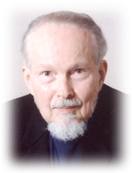
In the mid -70’s – the time of disco and long before the advent of digitization, I put down my basketball and decided to study music at the University of Regina. This led to one of the most unlikely pairings in the history of education, when I was taken under the tutelage of Thomas Manshardt, pictured here.
I was a raw unsophisticated kid from the old north end of Regina. I don’t know that we really use the term “good ol’ boy” in Canada, but that would give you an idea. Tom was easily the most sophisticated and cultured person I have ever met, which is a polite way of saying he was a total snob, and not always a very nice one. But he was exotic, unlike anyone I had ever met before, and before long I came totally under his spell.
He was the last pupil of the legendary pianist Alfred Cortot, which put him, and by extension me, in a lineage once can trace directly back to Chopin. To learn how to play Chopin from Tom was to learn if, a few times removed, from Chopin himself. (I’ve included a somewhat surreal video of Cortot at the end of this post.)
How he found his way from les grands salons of Europe to mid-70’s Regina is beyond comprehension, really. I can’t even imagine what the place seemed like to him. I’m sure he went to his grave with no awareness at all of the Roughriders or any of the rest of it. But It was a job, one that paid him well and allowed him to spend his days playing the piano, probably more wonderfully than anyone else I have ever heard.
I don’t know that I had ever encountered an actual gay person before I met Tom, although the fact that my best friend growing up, Roy, was gay was common knowledge, although never talked about. (Roy eventually came clean years later in a gay bar in Toronto, but that’s another story.) It may be that Tom was attracted to me. Certainly we spent many an evening sitting on the carpet of his Regina apartment (he possessed no furniture), drinking huge tumblers of Pernod with water, listening to Cortot and other masters of a bygone age. Maybe it was at times a tad potentially promiscuous and I was just too naïve to recognize it, I don’t know. But those evenings spent listening to Tom talk about art and music and life in general probably shaped me as an artist and even as a human being than any other person or situation ever would.
It was Tom who said again and again that art is a way of life. That may not seem like an earth-shattering notion now, but to a young man from a working class neighbourhood, it was news indeed. He showed me there was another way to live my life than the one that was expected of me. If I am an artist today, it is due to Tom’s influence.
The most obvious and persistent influence Tom had on me concerns my enduring love for fountain pens. He used a Montblanc Meisterstuck 149, which is still in my estimation one of the most beautiful objects on the planet. Tom kept a daily journal, as I do to this day. In fact, it could be said that my interest in keeping the journal grew greater than my interest in music, and so there came a day when I had to bid Tom adieu and get on with my life.
I would be a writer, it seemed, and not a musician. But either way, I would be an artist, trained not so much in the piano but in life studies by one of the finest artists I ever had the chance to meet and work with.
Tom came to a senseless end a few years ago. His legacy of music excellence lives on through his long time partner Lawrence Amundrud.
This is me this Sunday evening. Looking into my iPhone. Maybe even looking into my future a little. I don’t tend to like Sunday evenings, which were always a family time for me, and you know, being single and all, for the most part you try to be bon vivant but sometimes the loneliness can crush you, and for me, Sunday nights can be crushing lonely affairs.
But tonight I was invited for a lamb roast at the home of my friend Michael Finner, in the company of his brother Frank. And somehow we came through the evening fine, and I feel fine, which is good enough on a Sunday evening.I’ll take it!
Earlier today, I bought a K Way at the Bay. Wow. That sure rhymes. The lovely Marianne said I should write on my blog about it, about the experience of buying a K Way. I have been blessed with the ability to make any such simple transaction into an event. I said maybe I would. I reminded her that I once wrote a column in the Calgary Herald about Eva down in shoes. That column helped get Eva employee of the month or year or something. And if I ever go to Prague, I will be treated like a king! EUGENIUS 1! The point being, it doesn’t matter what you do, as long as you do it with some humour and a sense of humanity about you . . .
On any account, I walked home from Michael’s place and I felt suddenly infused with a sense of joy and contentment which is hardly fashionable to admit to these days when cynicism seems to have much more currency.
It goes back to something Frank said at supper. He was clearing off a good half of a pecan pie and he suddenly looked up at a beautiful view of the Calgary skyline on a suddenly sunny evening and we had tons of wine and everything else you could ask for and Frank said out of nowhere, “Life is pretty good, after all.”
He’s right. We bitch and complain about it, but life is pretty good after all.
Usually I have some higher purpose for writing a post on here. Like the future of photography. Or poetry. Or the mysteries of dramaturgy. but tonight I really don’t. I’m not really sure on a blog like this that it matters anyway.
I’m just showing you what I look like tonight, and hoping that you, wherever you are, are having a good night. And maybe even a good life. And that without being smug about it, feeling contented is possible.
Last November I got rid of my car and decided to see what life would be like in Calgary as a pedestrian and a user of public transit. I wrote a post about that on this blog at the time, and then wrote another after 3 months. I talked about the obvious advantages to my general health and finances. At that time, I figured I’d walked about 1,000 km I would otherwise have been sitting down for. Now that figure must be three times that. Put in practical terms, I suppose that’s like walking to Vancouver and back from Calgary.
When I first started this noble experiment, I suppose I felt like someone who in newly single after being in a long term relationship. Some people seem to feel that the default position for a human being is to be in a relationship, and that to be single implies a deficiency of sorts. But having been single for a decade now, more or less, I am finding for myself that it’s actually a positive position. I am one of the few people I know who actually enjoys being single.
Same too with my relationship with the automobile. At first, given that I live in Calgary which is a shrine to the car if ever there was one, my lack of wheels made me feel inadequate, somehow. Lacking. A negative position. But now that I’ve been at it this long, I don’t feel there in anything negative about it. In fact, I am reasonably convinced that what I am doing is right and that all the people I see alone in their cars burning expensive gas as they idle in traffic jams are wrong, on many levels.
Now that it’s summer, if that’s what this cold rainy season can be called, I have another mode of transportation at my disposal – my bicycle. The freedom and joy of riding my bike has made any desire to have a car again all the more remote. The great thing about it is the more you do it, the easier it gets, and the greater the distances one can travel. For example, one of the places I work at in North East Calgary seemed impossible to reach by bike a few months ago. Well last week, I rode my bike there. It took me less time than it used to take me to drive.
I just finished reading David Byrne’s book, Bicycle Diaries. The Talking Heads are one of my favourite bands of all time and I respect and admire David Byrne as a songwriter and performer and artist. Diaries is a meandering travelogue of sorts, having for a large part not much to do with bicycles at all. Which is all right, too. It’s interesting to read his take on arts and culture in different cities around the world.
While he doesn’t devote a chapter to Copenhagen, he does talk about the work of urban planner Jan Gehl, who has helped “successfully transform Copenhagen into a pedestrian- and bike- friendly city. At least one third of Copenhagen’s work force gets to work on bikes now!” I have no illusions about this every happening in Calgary, a city with a vested interest in keeping cars on the road for great distances and long stretches of time. But I notice that the bike racks here have more bikes locked to them this summer than they did last, so it feels like we are moving in right direction.
When David does get down to it, especially in the book’s epilogue, he talks convincingly about the important role the bicycle plays in the greening of our cities. He points out the obvious, that driving an automobile is not sustainable at all, and soon will have to end for all kinds of reasons. All of this makes me feel I am downright progressive and part of a vanguard that just might help rescue the city I live in and maybe even the planet from strangulation and suffocation.
If you’re interested in David Byrne and his take on different cities of the world (such as London and Istanbul) and cycling in general, this book is a good read. It’s not new, it first came out in 2009. (I found it at Fair’s Fair used book store.) It’s published by Viking.
I’ve included an interview with David about his design for bike racks in New York City.
Father’s Day. For me this year I have my daughter Hanna back in Calgary after half a year in Europe, en route either to New York or Montreal (or both). Today (Saturday) is actually her birthday. Some years, Father’s Day and Hanna’s birthday fall on the same day. But this year, just being a day apart, it feels like a special confluence of dad and daughter celebrations. Having her here is all the gift I need. Our tradition is to celebrate Father’s Day and her birthday with a sushi dinner.
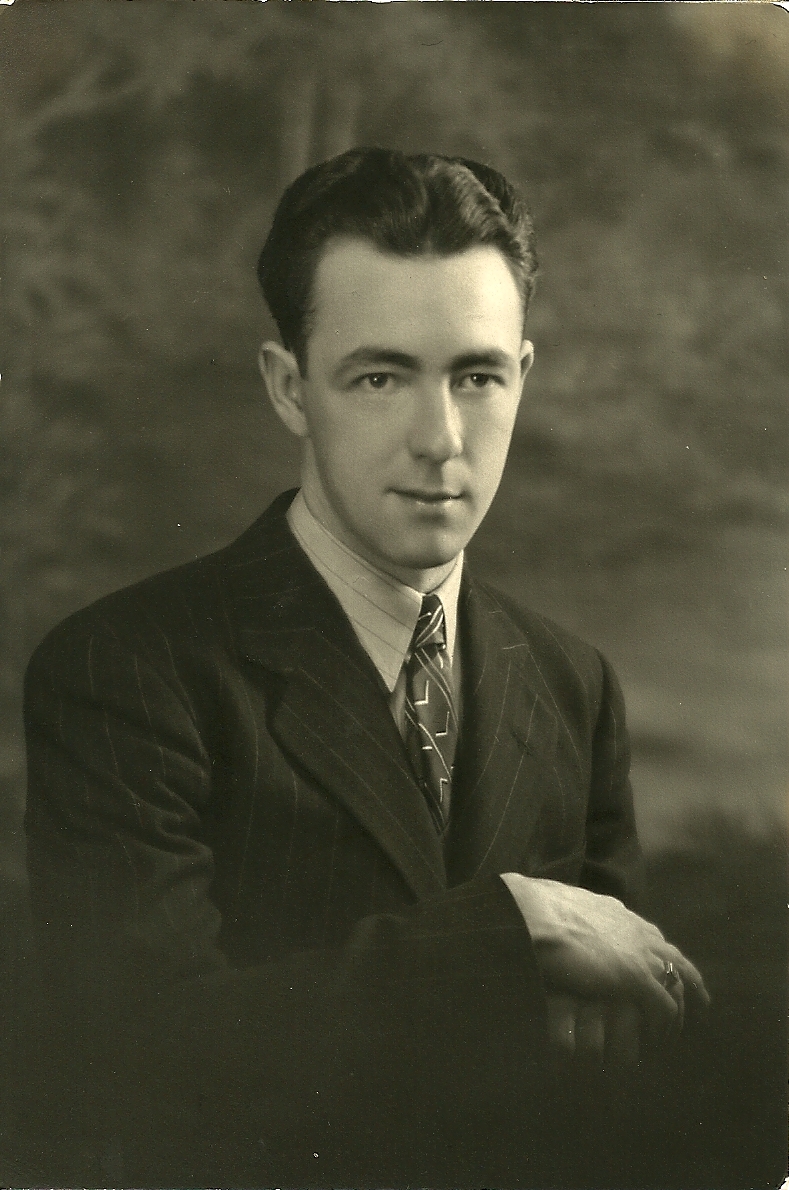
Of course, Father’s Day cuts both ways, as it were, and while I love celebrating it with my daughter, I can’t help but think of my own father this weekend. My dad, Leonard Stickland, pictured here in a photo probably from the early 1940’s, passed away in 1995. That’s a long time ago, almost as long as Hanna has been alive. They say time is like an avalanche, it just keeps gathering momentum and moving faster and faster, and they’re right about that.
Om any account, I have a little time to myself this summer and so have embarked on a number of writing projects, including finishing a volume of poetry and noodling around with a new play. At the same time, I have been writing a short story about an incident from my childhood. It’s been years since I’ve written a short story and I am enjoying the process immensely.
In this story, which is a nostalgic and meandering thing, perhaps straining the designation of being short at all, I tell a little story that involves my father, and so in his memory, I thought I’d share this excerpt here. It might well be entitled, “Wolfe.”
Wolfe
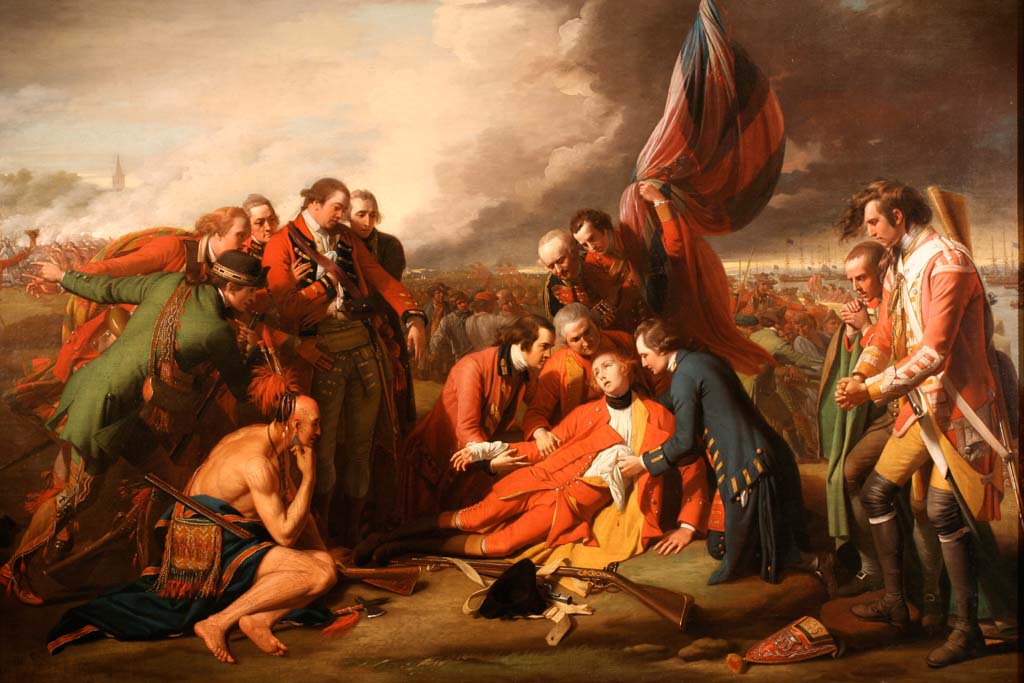
As the son of an English immigrant, my father, like his father, no doubt, could never understand let alone tolerate the existence of the French in Quebec and other parts of Canada. Had not things been settled once and for all on the Plains of Abraham all those years ago? Had General Wolfe and his British troops not prevailed? At all of our Christmas dinners and other formal affairs in our house, my father (a man of few words, it should be noted) would rise to give a toast to family and friends, invariably raising his glass and saying, with deep emotion, “To Wolfe!” And we would all demurely respond to the toast with a “To Wolfe” of our own. I don’t think I actually knew what I was toasting with my apple juice until I was well into my teens. Before that, I probably thought my father, who hated dogs, had some deep and inexplicable affinity for the animal.
Long after my dad had passed away, I happened to find myself in Quebec at a translation residency, where a play of mine was being translated into French. There were a number of plays being translated back and forth from English to French and from French to English, and we all bunkered down in the beautiful summer home of the late Bill Glasgow in Tadoussac, Quebec for a week or so.
Such a gathering of artists and intellectuals in Quebec where language was of paramount concern would of course be a charged and potentially politically explosive situation. At the time, Quebec was particularly obsessed with its national identity and the language issue. In fact, this was around the time that the province came within a hair of voting to separate from the rest of Canada. As the only person there present from western Canada, where we all supposedly hold red necked, anti-Quebec sentiments, I sometimes felt myself on the hot seat, having to demonstrate to my hosts and fellow translators and translatees that not all westerners are latent racists and English supremacists. I am neither, and think I did a good job of changing these preconceptions in the minds of my fellow artists from Quebec.
On the way back from Tadoussac to Montreal, we were traveling in a van and stopped in Quebec City to drop someone off. When we pulled up to park, I saw a tourist sign pointing towards the Plains of Abraham. Of course I was reminded of the battle, and General Wolfe, and my late father’s toasts at so many of our family gatherings. Almost before I realized I was actually speaking out loud, I related this story of how dad would begin all of our festive occasions with a solemn toast to his beloved General Wolfe.
My story was met with a resounding silence. It was raining and the only sound to be heard was of the raindrops pelting against the van. I thought to myself, my god, a week of good will undone by a stupid reminiscence of my dad, throwing up once again the whole French-English situation. Steam on the insides of the windows, the rain tricking down outside, as time seemed to stop. Yet, the gods were on my side. Once what I had said registered, and it took a few moments because it was so outrageous, someone began to laugh. And then someone else. And soon we all were laughing heartily, and for that moment, at least, centuries of animosity seemed to wash away.
Years later, while at a residency at the Stratford Festival in Ontario, my friend Linda, who had been the den mother of the residency at Tadoussac and driver of the van that day, who is one of the most respected translators of dramatic work from French to English in the land, looked across the dinner table at me one evening, solemnly raised her glass, and said quietly, “To Wolfe.” It was a glorious moment, recalling our beautiful time in Quebec a decade earlier. “To Wolfe,” I replied and we touched glasses.
My dad, needless to say, would not have seen the humour.
___________________________________
Thanks for reading. Happy Father’s Day, everyone. Happy birthday, Hanna!
The Death of Wolfe by Benjamin West, my father’s favourite painting.
Those who know me either through this blog and my other writings, or from real life (whatever that is – I hear it’s overrated!) will know that I am an inveterate diarist. One of my favourite and habitual activities is writing in my journal, an activity I carry out in various coffee shops around the world, most often in Calgary’s Caffe Beano off of 17th Avenue South West.
I have been doing this since the mid 1970’s and now I think of my journals and diaries as one huge amorphous oeuvre, comprised of, by conservative estimate, two to three million words.
After perhaps a million or so of these words had been recorded in my various notebooks, I had managed to achieve a sufficient amount of fame or notoriety to warrant the creation of my archival collection at the University of Regina. This collection, which I believe anyone is welcome to view in the library of the U of R, contains, for now at least, early drafts of some of my plays along with letters and laundry lists and other pieces of paper from the day-to-day of my ever so fascinating life.
But coming down the road, that long dusty road that plies its way through the prairies of my home province, is this flood of words and the books they are written in, destined to end up with all my other writings in the archival collection. (This is a horrible metaphor, as if a flood would travel on a road. Perhaps it’s more of a caravan or convoy. Or maybe there is no road. But you get the picture, muddled as it may be!)
The point remains, the journals are destined to repose of the shelves of the library of the University of Regina as part of my archival collection.
Here’s the thing: how does the fact that one knows that one’s journals will be open for public scrutiny some day alter the writing? Can one continue to be as honest with one’s innermost thoughts that are, essentially, private in nature but that obviously find their way onto the page, when one is aware that someday in the future (near or distant, who can know?) others will be able to read them?
I’m forever telling people whom I get involved with on many levels, from business to romance, (though there hasn’t been much of either, lately, alas) that they will be written about and the books they are written in will be around for some time to come. And that I don’t pull my punches. And that little bit of information should make a few people reading this at least slightly nervous.
My thinking on this is that by the time they hit the shelves, I’ll be dead and people and events I write about will be insubstantial shadows, so what will it really matter, anyway? Well, it might still matter to you, dear reader, so I suggest you govern yourself accordingly. (You know who you are, even if I don’t, exactly . . .)
The other alternative I suppose would be to do as many writers do and burn the journals before I shuffle off to sing with the choir invisible. Or if I’m too feeble and deranged at the end to do it myself, leave instructions for someone else to do it should my passing be sudden and unexpected, which I am sorely hoping it will be. But burn those two or three million words? It doesn’t seem to me to be an option. In many ways, I think of this gigantic sprawling work as the greatest artistic statement I cam capable of making. Burn it? It just seems too self-negating, and those who know me will know self-negation is not something I’m exactly known for.
The trick is to remain honest and true, not censoring your thoughts or opinions, yet being mindful that at some point in the distant reaches of time, someone will surely read those words, and in your absence, and they will be all they have, really, from which to form an opinion of you and the people and events of your life. I find that prospect both scary and exciting at the same time.
Now, this was all meant to serve as a prologue for a lovely letter (via Facebook) I received a while back from my friend, who for now I shall call R, which you will discover as you read was prompted by other of my musings (or ramblings) about journal writing.
It’s seldom that we take the time anymore to write a well-reasoned letter, and I was so touched by this one that I decided to share it here.
It’s a good reminder that a well thought-out letter, written with care and attention, may be rare these days, but it is perhaps more than ever a worth-while endeavor. In fact, it’s downright precious Here it is . . . .
Hi Eugene,
I read your note about your journals yesterday morning. For some reason it stuck with me and I kept thinking about it all day, a day, when for some reason, and no reason in particular, I was feeling generally sad and out of sorts. Then, on the c-train, I read this and felt maybe I was meant to share it with you. Not sure what it means, if it means anything…but I am compelled to share it here, so here it is, quoted by Margaret Atwood in Negotiating with the Dead, from Hjalmar Soderberg’s Doctor Glas:
Now I sit at my open window, writing – for whom? Not for any friend or mistress. Scarcely for myself, even. I do not read today what I wrote yesterday; nor shall I read this tomorrow. I write simply so my hand can move, my thoughts move of their own accord. I write to kill a sleepless hour.
And this, also quoted in the Atwood, from Orwell’s Nineteen Eighty Four:
For whom, it suddenly occurred to him to wonder, was he writing this diary? For the future, for the unborn…For the first time the magnitude of what he had undertaken came home to him. How could you communicate with the future? It was of its nature impossible. Either the future would resemble the present, in which case it would not listen to him: or it would be different from it, and his predicament would be meaningless.
Then, she says:
For whom was Samuel Pepys writing? Or Saint-Simon? Or Anne Frank? There is something magical about such real-life documents. The fact that they have survived, have reached our hands, seems like the delivery of an unexpected treasure; or else like a resurrection…The older one gets, the more relevant Beckett’s play Krapp’s Last Tape comes to be.
Happy Day to you :o)
R
And happy day to you, dear reader. Thanks for the visit . . . .
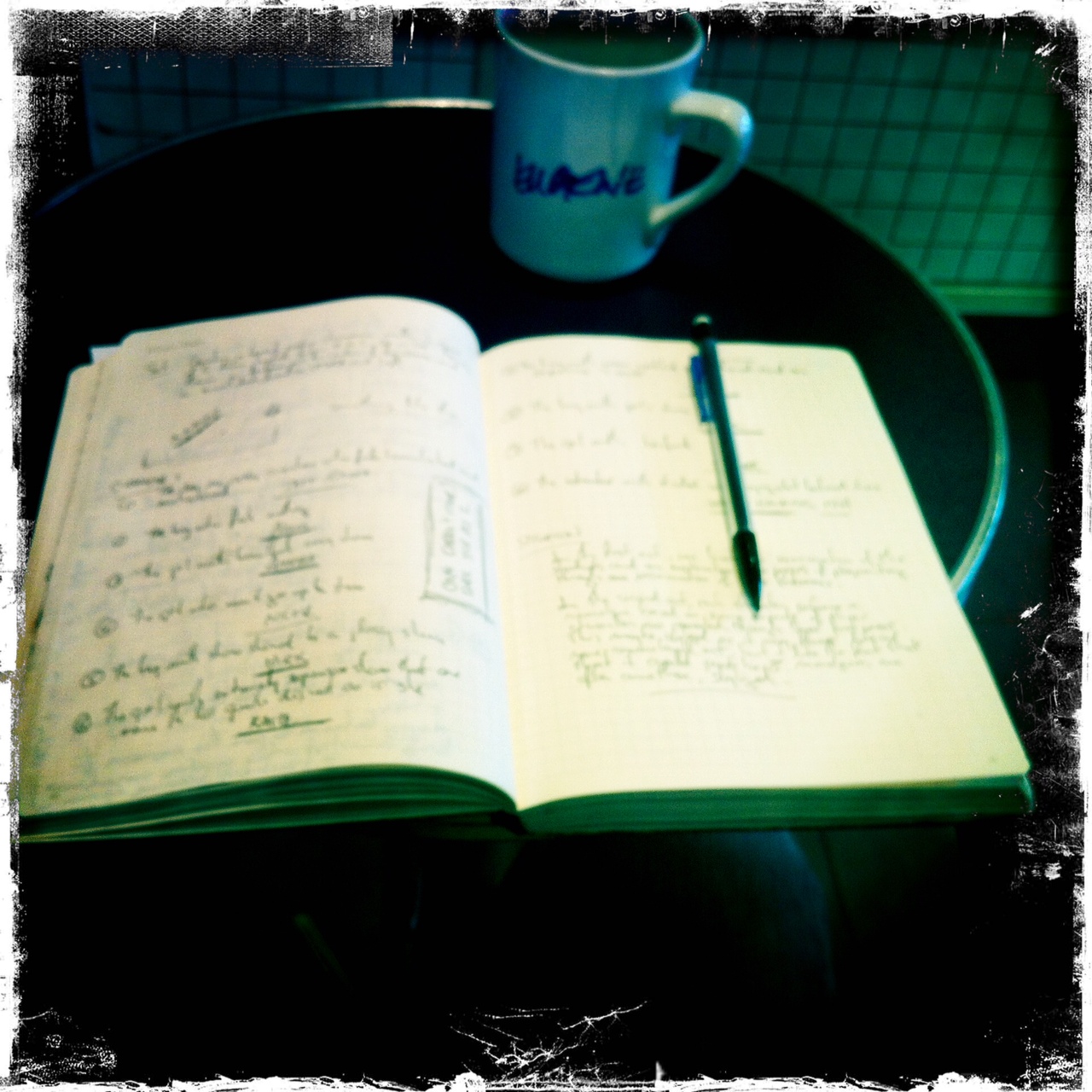
It was a fuzzy morning at the coffee shop. I was looking at my notebook but nothing much was coming. You can’t divorce the day to day events from the art. The day to day was getting me down. The old lament. No work. A dwindling bank account. No prospects. Well, prospects, but they all seemed to be on the distant horizon.
The last three months of teaching had rendered me absolutely exhausted, I had not done enough of the work I need to do, artistically. It’s the old conundrum, how does one balance the need to make a living and pay the rent with the need to create art? Could I endure a few tough months, financially, in order to finish my book of poems?
And then all the other stuff. What’s going on with my hair? Why when I am walking everywhere and riding my bike everywhere am I unable to shed these 20 pounds? And the state of my wardrobe. What’s going on there? And the state of my love life which even by my own bizarre standards is, well, bizarre. And my hair, always my hair concerns. All these thoughts circulating in my brain, not exactly a healthy state of mind for creating great art.
A friend passed by and asked, “What are you working on?”
The truthful answer would have been, “Not much.” But I put on a brave face and said, “Trying to finish off my book of poetry.”
He asked, “How long have you been working on that?”
I said, “All my life.”
He took his seat and I went back to staring at my notebook. And then a man I have never seen before approached me and said, “Sorry to interrupt you but I heard what you said and I just thought that was so profound I had to say something. I know what you do, and I know you do it for not much money or recognition, but I wanted you to know that some of us appreciate you, and admire what you do.”
And then he left. I took a deep breath. I swear to God, if only one person is listening, just knowing that gives you the strength to carry on.
I squared my shoulders and picked up my pen and started to write.
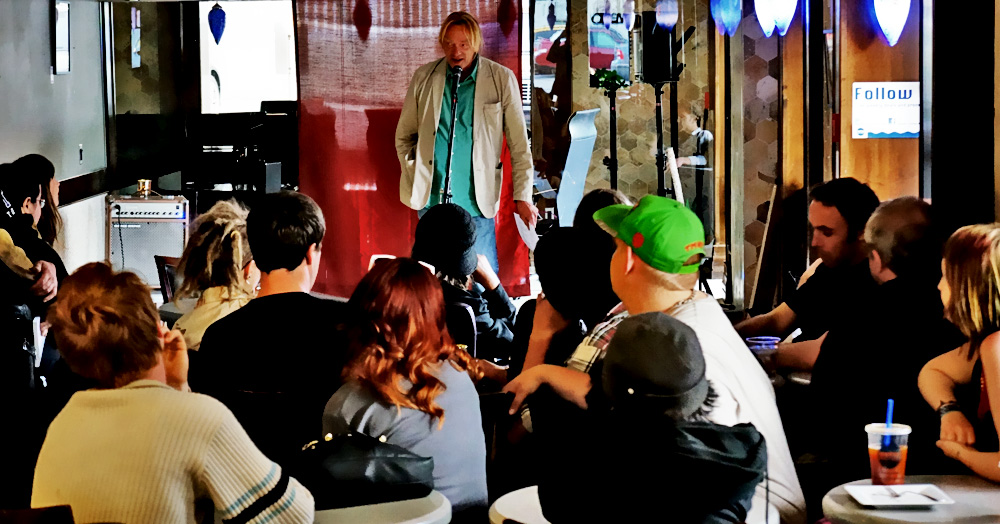
In my last post, I talked about how changes in technology, especially having to do with smart phones and various Apps like Instagram, have changed the nature of photography, both how it is done and how photos are shared. But what I really set out to talk about was poetry. This post is an elaboration of something I said, probably was in the middle of saying in the photo on the left, at a poetry gathering the other evening. That being, how is it that with all the new technology available today that poetry not only survives but seems to be thriving with little or no influence brought to bear on it by technology?
As I said in my last post, nowadays it’s easy for people to think of themselves as photographers, maybe even a serious photographers, depending on the number of followers they have on Instagram, say.
And yet while this makes perfect sense at some level, what seems remarkable to me is at the same time, more and more people are writing poetry, yet using none of the new technology in the process. iPads and Airbooks and notebook computers have their place for certain types of communication, but from what I’ve observed, poets still favour a pen and notebook (of the paper variety) and in this regard the process of writing poetry hasn’t really changed all much since Shakespeare was writing his sonnets a little over 400 years ago.
I don’t know of anyone who has an App on their phone or tablet that facilitates the writing of poetry. I don’t even know that there is one. (That said, there are two good programs I have discovered for word processing on my computer, Omni Writer and Write Room, that help create a very intense and lovely writing environment, and yet I can’t say I have ever composed anything using either of these programs.)
For me, as for so many, it’s still a matter of opening the old Moleskine (or Leuchhturm which I’ve been using lately and actually prefer to Moleskine) notebook and taking out a pen or pencil and having at ‘er. Technology only enters into the picture when it comes time to edit, I should think. Although one thing I’ve seen lately is people reading a poem from their smart phone, something I haven’t tried yet, but it looks kind of flashy and modern. I guess I’m terribly old-fashioned in this regard — I like the comfort of the paper, or the book, in my hands when I’m giving a reading.
But as I say, poetry seems to be thriving these days nonetheless. If you look at the above photo, you will see a good cross-section of people, of all ages and sexualities and finances and levels of education who have gathered together for the shared communal experience of communicating something vital to them with a roomful of virtual strangers.
That this is just one of many such reading series in a mid-sized city not universally known for its poetry gives a strong indication that whatever the world may be now, there is perhaps more than ever a need for poetry in it.
When I was writing plays and seeing them performed with some regularity, I used to remark on this same kind of shared communal experience that the theatre offers. In one of my ramblings, probably in the Calgary Herald, I speculated that while religion is not a serious option for many people these days, we still seem to feel the need to congregate and share our stories and our feelings. I believe the theatre does that — and I believe that’s why it is still a viable and essential art form.
Now that I seem to be entering a new phase in my life as a poet, I am seeing the same thing at the readings I attend. The internet, and even things like this blog, that you are probably reading in the privacy (and isolation) of your own home, have conspired to isolate many of us, while at the same time (as on Facebook) ironically making us feel more connected than ever before.
But I think it’s safe to say that as a species, we need shared communal events. In essence, we need community. Not electronic, but actual flesh and blood and bone. As an artist, I believe I am able to contribute to this cause, and the feeling I get in a theatre, or a poetry reading, tells me that it’s not a luxury, it’s a necessity. And so I soldier on.







 eugene stickland